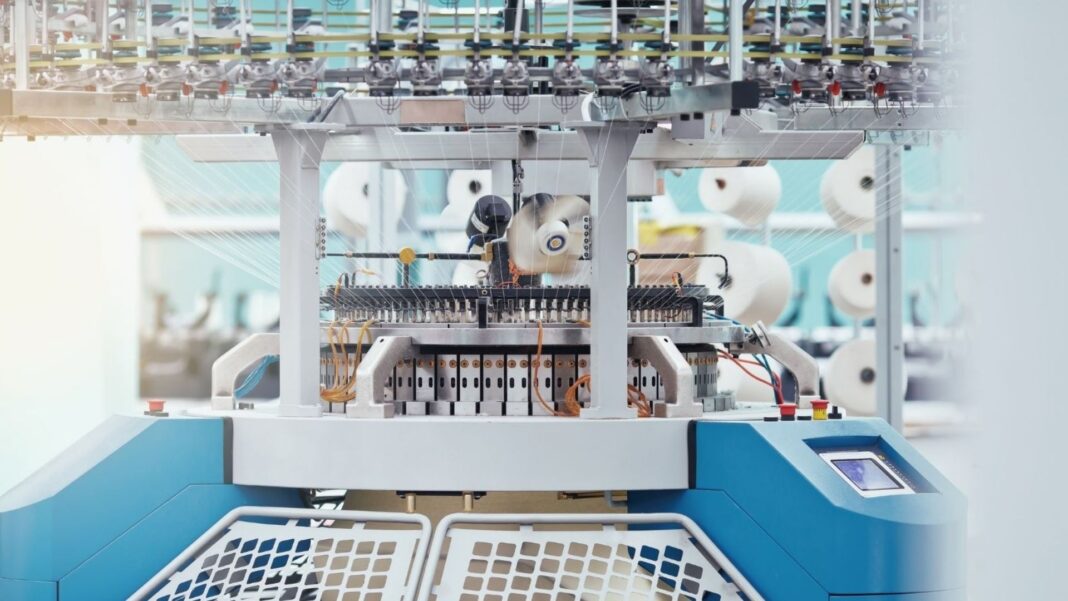


Since the Industrial Revolution, the textile industry has evolved from handlooms to factory-based production systems, rapidly expanding to become one of the world’s largest manufacturing sectors. Industrialization, which replaced manual labor with machinery and enabled higher and faster production, also set the stage for the rise of fast fashion. As the social and environmental consequences behind colourful storefronts and runways have increasingly come under official scrutiny, these speed- and volume-driven production technologies have entered a process of restructuring. Today, the textile industry is no longer under pressure solely to produce “faster,” but also to produce “more sustainably.” This raises the question: Is technology still an instrument of growth, or a catalyst for transformation?
Since the Industrial Revolution, the primary objective of technology investments has been to increase production capacity, reduce costs, and produce more goods. However, textile technologies—ranging from spinning and weaving to finishing, dyeing, and printing—while enabling higher-capacity and lower-cost production systems, have also generated a range of negative socio-economic and environmental impacts over time. The industrialisation that began in 18th-century England’s textile sector and led to the development of modern mass production systems only began to face formal regulatory action regarding its environmental consequences in the 21st century.
Within the global effort to address the climate crisis driven by human activity, one of the most significant and comprehensive policy initiatives has been the European Green Deal, announced in December 2019. As carbon regulation mechanisms and the Digital Product Passport have been introduced to ensure that products are manufactured according to sustainability criteria and that their entire journey—from cradle to grave—is documented with transparency and accountability, the industry has entered a broad restructuring phase aligned with circular economy targets. Today, with a global market size of approximately USD 1.16 trillion, the textile industry once again stands at the centre of this transformation. Textile technologies, systems, and machinery possess significant transformative power, particularly in improving production processes that are highly resource- and waste-intensive.
The hidden cost of the growth model
Since the Industrial Revolution, the primary objective of technological investment has been to expand production capacity and reduce unit costs. From steam power to electrification, from automation to digitalisation, each technological wave has expanded production scale and increased global supply.
While this expansion has supported economic growth and rising living standards, it has also created a structural side effect: a linear increase in resource consumption. For decades, this impact remained largely overshadowed by dominant economic growth narratives.
However, by the 21st century, the picture began to change. Demands to limit environmental impact started gaining momentum in Europe from the 1970s onwards. This shift coincided with the reconfiguration of global production networks under globalisation, and the relocation of labour-intensive textile manufacturing to Asian countries, particularly China. During the same period, Europe’s industrial profile gradually shifted away from production towards regulatory, design-oriented, and high-value-added manufacturing activities.
Climate change, water stress, and carbon emissions are no longer external consequences of production systems; they have become direct design parameters.
This turning point has been institutionalised through frameworks such as the European Green Deal, carbon regulation mechanisms, and Digital Product Passports. As a result, production is now defined not only as an economic system, but also as a measurable environmental system.
Textile industry: a laboratory of transformation
With a global size of approximately USD 1.16 trillion, the textile industry is one of the sectors where this transformation is felt most intensely. This is not only due to its scale, but also to its intensive consumption of water, energy, and chemicals.
As a result, textile technologies are no longer merely tools for increasing production speed; they are evolving into systems that measure, optimise, and report resource consumption.
This shift marks a critical transformation in the fundamental role of technology: technology is no longer only scaling production—it is governing production itself.
Industry 4.0: from efficiency to governance
Each industrial revolution has redefined the logic of production.
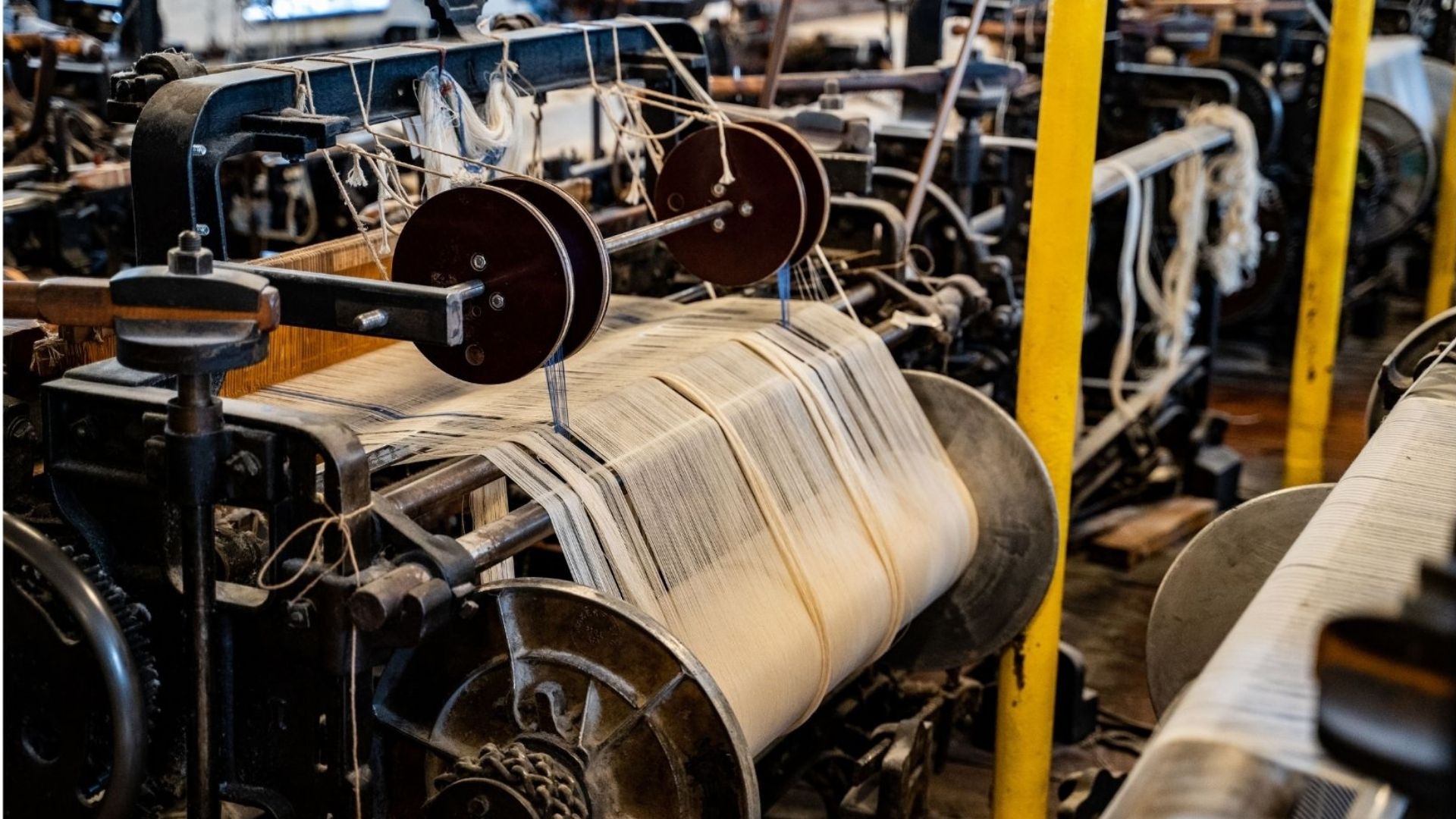
The First Industrial Revolution moved production from workshops to factories. The Second introduced electricity and mass production, establishing economies of scale. The Third enabled standardisation through automation and electronic control systems.
Today, with Industry 4.0, production is becoming not only automated but also data-driven and interconnected.
IoT-based monitoring systems, AI-supported quality control, digital twin technologies, and real-time data analytics do not only optimise production—they make it predictable and controllable.
At this stage, the critical shift is clear: the goal is no longer efficiency alone, but the balanced management of environmental impact and production requirements.
The paradox of technology: efficiency vs. consumption
At first glance, this transformation appears highly positive from a sustainability perspective. However, a fundamental paradox emerges: efficiency gains do not always reduce resource consumption.
According to the “rebound effect” in economic literature, improvements in efficiency can lead to increased overall consumption. Faster and cheaper production often stimulates higher demand.
This is particularly critical in sectors such as textiles, which operate on fast consumption cycles. In other words, while technology optimises resource use on one hand, it may simultaneously increase total production volumes, thereby reproducing environmental pressure.
For this reason, technology alone cannot be considered a solution; it is one component of a broader circular textile value chain.
Redefining investment decisions: the TCO approach
For many years, investment decisions in the textile industry were driven primarily by machine price and production capacity. However, rising energy costs, carbon regulations, and sustainability pressures have rendered this approach insufficient.
As a result, the Total Cost of Ownership (TCO) approach has gained importance. This model includes not only purchase cost, but also energy consumption, water usage, maintenance, software infrastructure, labour requirements, and carbon costs.
Consequently, a machine with a low initial purchase price may become disadvantageous over its lifecycle due to high resource consumption. Conversely, systems with higher upfront investment can deliver lower environmental and economic costs over time.
This represents a structural shift in investment logic: price is no longer the primary criterion—lifecycle performance is.
New machine or modernisation?
Another increasingly important question in the sector is whether to invest in new machinery or modernise existing equipment.
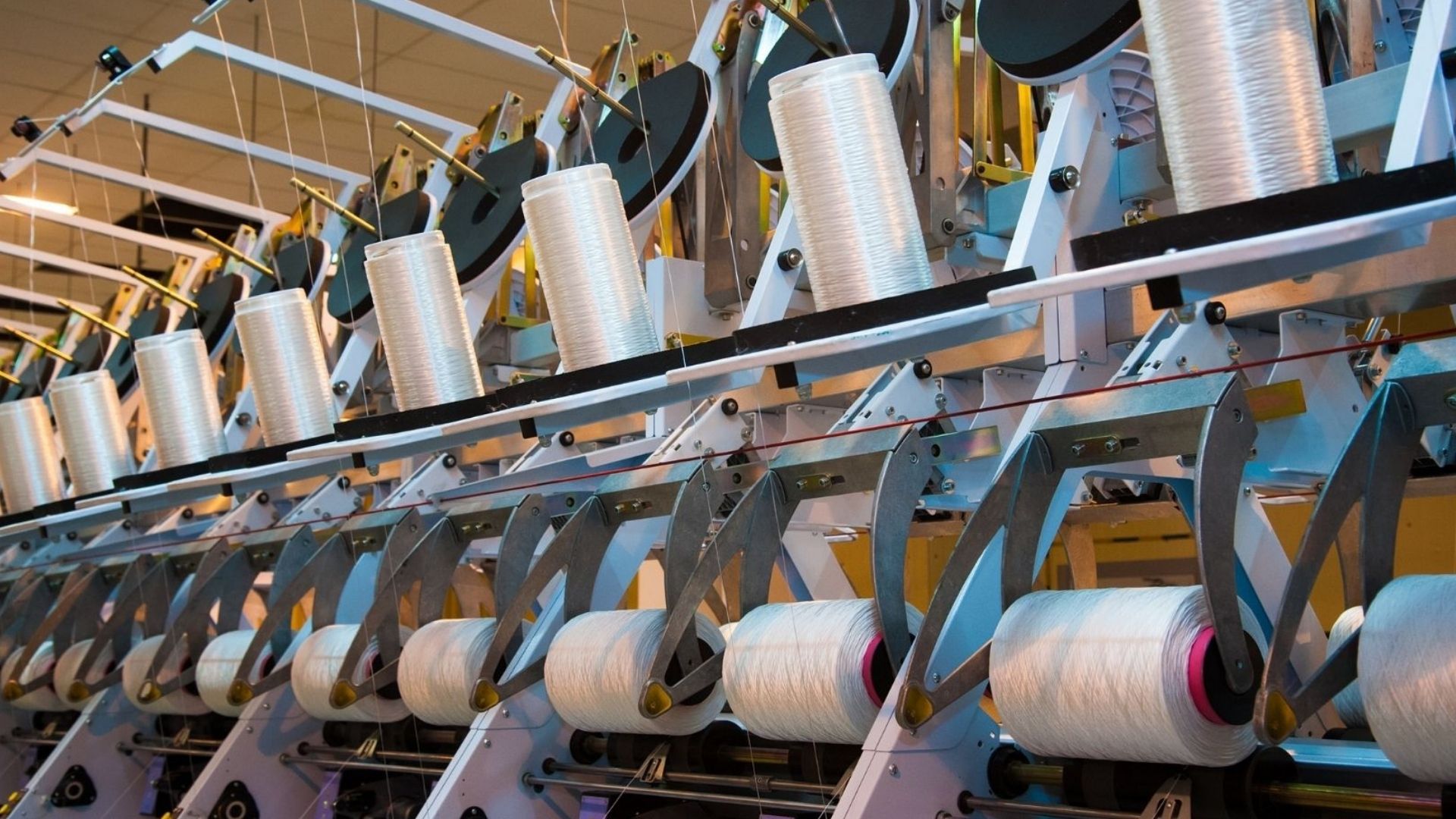
Next-generation machines offer higher efficiency and automation, while retrofit solutions are emerging as a strong alternative. Through sensor integration, software upgrades, and predictive maintenance systems, the performance of existing machines can be significantly enhanced.
A critical advantage of this approach is the preservation of embedded carbon. In other words, optimising existing equipment rather than replacing it entirely can reduce the overall environmental footprint.
However, technological transformation cannot be reduced to a binary choice between “new machine or modernisation.” In emerging textile markets, hybrid production models combining legacy and advanced technologies are becoming increasingly common. Investment decisions are also shaped by multi-dimensional factors such as brand loyalty, service infrastructure, and supplier relationships.
The technical backbone of the circular economy
For a long time, the circular economy was discussed primarily in terms of material selection and consumer behaviour. Today, however, the role of production technologies in enabling this transition is increasingly recognised.
Recycling systems, closed-loop water technologies, AI-powered quality control, digital traceability platforms, and energy management systems now form the technical backbone of the circular economy.
In this context, circularity is no longer merely a design or material issue; it is fundamentally a matter of technology architecture. Machine manufacturers are increasingly “turning” their gears towards enabling the sustainability transition.
Changing competitiveness criteria
This transformation is also repositioning technology suppliers, not only manufacturers.
In the past, machine performance was measured by speed, capacity, production volume, and durability. Today, energy efficiency, data generation capability, traceability, and lifecycle performance are equally critical.
Competitive advantage is no longer defined solely by “how much you produce,” but by “how you produce and how transparent that production is.”
This new paradigm elevates machinery beyond production equipment, positioning it at the centre of data, traceability, and sustainability performance in industry.
Technology is redefining the limits of growth
For over two centuries, the primary function of textile technology has been to increase production. Today, however, the industry stands at a different threshold.
What is expected from technology is no longer capacity alone, but also energy efficiency, data transparency, traceability, and environmental performance.
As a result, the transformation of textile technologies is not only about developing new machines, but also about redefining what success means.
Whereas competitiveness was once measured by production volume, it will increasingly be defined by resource efficiency, system transparency, and regulatory compliance.
In this sense, technology is no longer merely a tool that accelerates growth; it has become a structural regulator defining the boundaries within which growth is possible.
From the first screw to the latest software layer, machines are now shaping the identity of textiles. The real question is whether the industry will continue with the identity of the past—or create a new one for the future.
