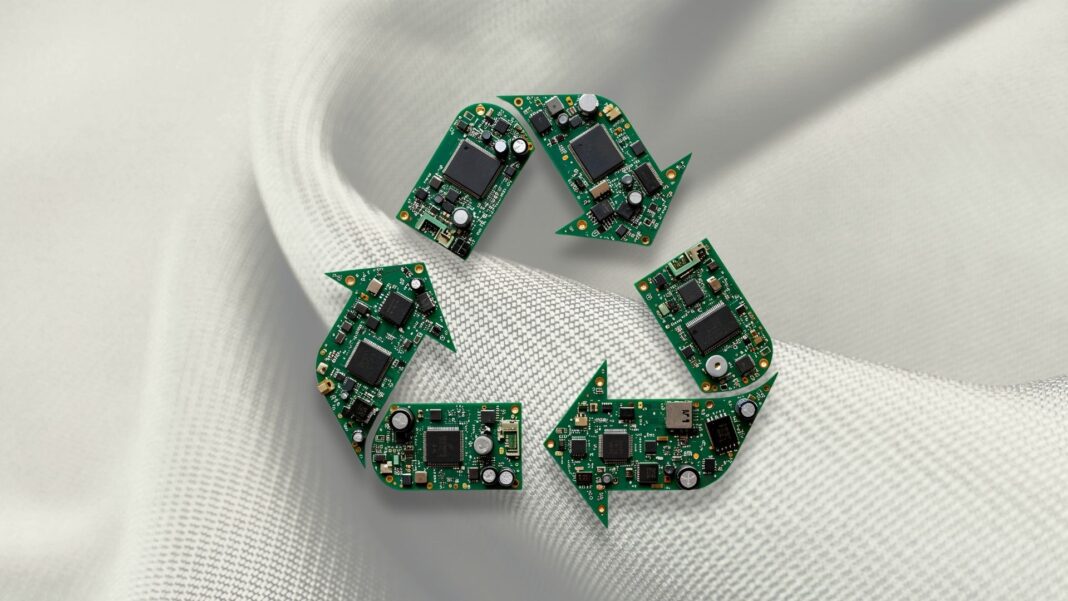


Equipped with sensors, conductive yarns, batteries and microchips, e-textiles (electronic textiles) are opening up new application possibilities ranging from health monitoring and sports performance to occupational safety and military applications. However, researchers warn that the growing adoption of these products could create new challenges for waste management and recycling.
According to an analysis published on the non-profit international academic digital publishing platform The Conversation by researchers from the University of Southampton, textile products containing electronic components could pose significant challenges for existing recycling systems at the end of their service life.
While textile waste and electronic waste are currently managed through largely separate systems, e-textiles combine the characteristics of both waste streams in a single product. This makes dismantling, separating and recycling these products considerably more complex.
E-textiles could create a new environmental burden
The global market for e-textiles is projected to reach over US$15 billion by 2028. According to the researchers, although e-textiles have not yet developed into a large-scale market, establishing the necessary standards before the sector expands is of critical importance. They emphasise that products should be designed to be repairable, easy to disassemble and recyclable, while manufacturers should assume responsibility for products at the end of their service life. Otherwise, they warn, the addition of electronic components to textile waste could create a new environmental burden.
The researchers also argue that for e-textiles to contribute to sustainability goals, innovation must focus not only on product performance but on the product’s entire life cycle. In this way, e-textiles could become innovations that deliver environmental benefits; however, this will require recycling and waste management policies to advance in parallel with technological development.
The solution begins with product design
The researchers state that the solution must begin at the product design stage. They suggest that electronic components should be designed so they can be easily separated from textiles at the end of a product’s service life; that the materials used in products should be traceable through digital records; that recyclable or biodegradable conductive materials should be preferred; that energy harvesting technologies should be developed to reduce battery requirements; and that common testing standards should be established for e-textiles covering washability, durability and end-of-life performance. Together, these measures could help reduce the future burden of electronic waste.
