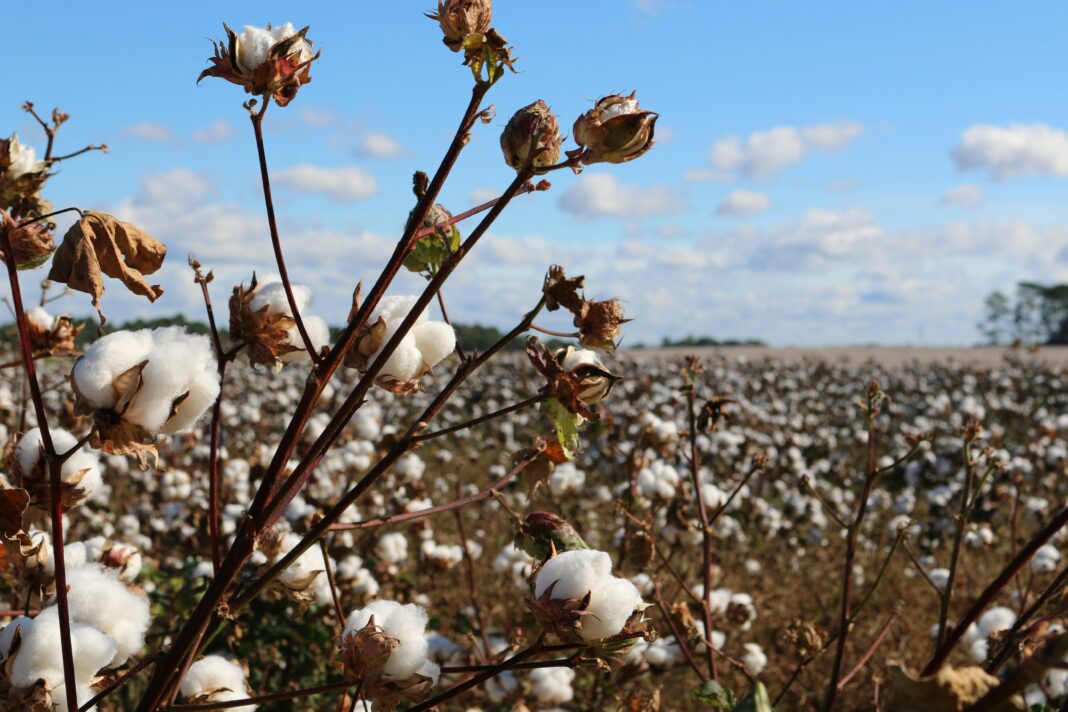


The International Cotton Advisory Committee (ICAC) has announced the Carbon Credits Initiative designed to unlock additional income streams for cotton farmers through participation in carbon credit markets, linking sustainable production practices directly to financial returns.
Under the program, participating producers could generate up to $200 per hectare in additional revenue, while simultaneously improving soil health, enhancing resilience, and contributing to climate change mitigation.
The initiative integrates regenerative agriculture practices, biochar application, and a robust monitoring, reporting, and verification (MRV) system to generate high-quality, certified carbon credits that meet international market standards. By combining scientific approach with practical on-the-ground implementation, the program aims to ensure both environmental integrity and financial viability.
The model is being implemented in Uzbekistan as part of the pilot phase
A pilot phase is currently underway in Uzbekistan, where early results indicate strong potential for replication across cotton-producing countries. The model offers a scalable pathway to climate-smart agriculture, enabling farmers to benefit economically from sustainable land management while contributing to global climate goals.
Merago Inc will oversee for the MRV processes for the carbon credits generated
To support implementation and market integration, ICAC has partnered with Merago Inc, which will oversee MRV processes, certification, and the trading of carbon credits generated under ICAC-led regenerative agriculture and carbon sequestration programs.
The ICAC Secretariat invites governments, private sector businesses, certification bodies, and industry experts to collaborate in scaling this initiative and expanding its impact across the global cotton sector.
What is biochar, and is it a sustainable alternative?
Biochar has found widespread usage as an environmentally friendly material for soil improvement and remediation, water pollution control, greenhouse gas emission reduction, and various other applications. It is preferred for characteristics such as its large surface area, porous structure, and the abundance of oxygen-containing functional groups on its surface. However, some academic studies draw attention to the potential environmental risks associated with biochar.
While it is noted that biochar may inevitably alter the physical and chemical properties of soil—potentially negatively affecting the growth conditions of soil microorganisms and agricultural crops—researchers also emphasize that, in order to prevent possible risks, the negative environmental effects of biochar should be systematically evaluated from the perspective of different environmental media.
