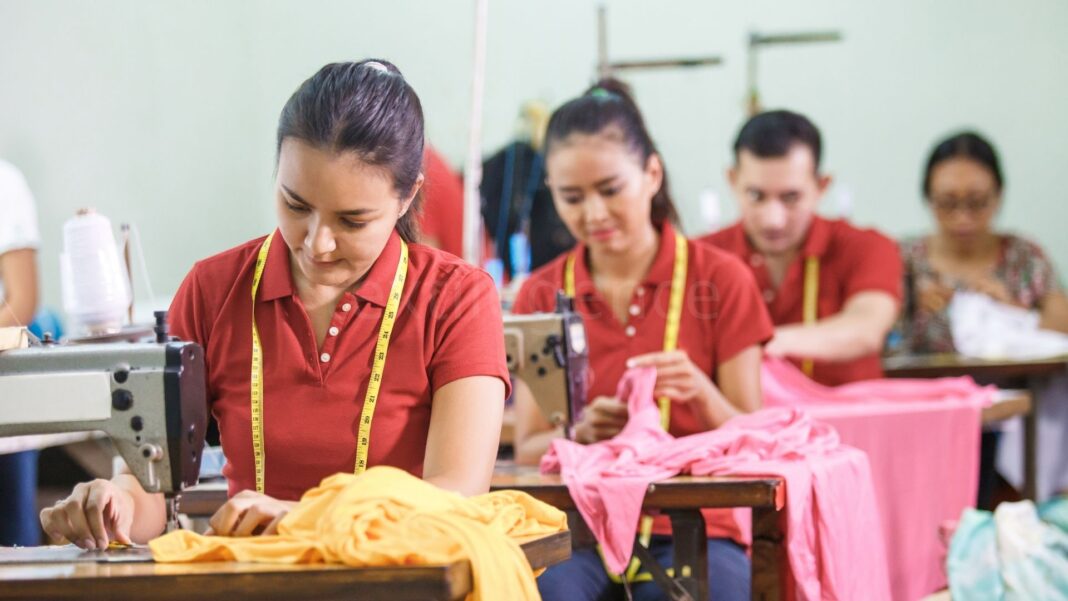


Emphasizing a just fashion system in which human values come before profit, the “Fashioning a Just Transition Manifesto” was published on May 1 by the Clean Clothes Campaign (CCC) and its partners in several countries across Europe and Asia. Alongside core principles reflecting gradual improvements toward the current sector up to 2030, the manifesto sets out a vision of how the future of fashion should be. It aims to serve as a guiding tool to raise awareness and empower workers, while encouraging the public to come together in solidarity for a just transition with workers in the garment and related sectors across global fashion supply chains.
The Fashioning a Just Transition was initiated by the international Clean Clothes Campaign network, which works to improve working conditions and support the empowerment of workers in the global garment industry, and was developed with contributions from young people, workers, and other stakeholders.
“Those most affected by the crisis are the workers who form the basis of production”
Bego Demir, founder of CCC Türkiye (Temiz Giysi Kampanyası Derneği), stated that the manifesto sets out the vision of workers, trade unions, and civil society fighting for workers’ rights for the coming period:
“Climate crisis has become a concrete reality for everyone in recent years, with increasing fires, floods, and tsunamis. However, those most affected by this crisis are the workers who form the basis of production. With this manifesto, we highlight structural problems in the global textile sector and express our demands for solutions. This approach, based on just fashion, is inclusive of all stakeholders while centering the workers who pay the highest price.”
“Fighting climate change alone is not enough”
Khalid Mahmood, Director of the Labour Education Foundation (LEF), Pakistan, stated that the manifesto reflects their conviction that climate action in the garment industry must go hand in hand with labour rights, social justice, and corporate accountability:
“For workers in Pakistan, environmental transition cannot be considered just unless it also guarantees decent work, living wages, occupational health and safety, freedom of association, social protection, and meaningful participation of workers in decision-making. The manifesto provides an important framework for ensuring that the costs of transition are not imposed on workers and communities in the Global South but are borne by those who profit most from the industry.”
“This industry can benefit everyone, not just some”
Alena Ivanova, Campaigns Lead at Labour Behind the Label, said The CCC Just Transition Manifesto is an important marker for their movement: “While it shows we have a lot of work to do to build the world we want to live in, it also shows us we are far from alone in that fight. We recognise that wealth redistribution, tax justice, and welfare protection for all are as important as sustainable resource use and environmental protection.”
Ivanova, arguing that the CEOs and institutions that built their wealth on this broken system won’t come up with the solutions to fix it, added:
“But we will. Workers, consumers, citizens, rights defenders – the fashion industry is not designed for our well-being. But the Manifesto shows us we have the power, the vision and the imagination to radically transform this industry, so it delivers for all of us.”
The manifesto lists the principles that should form the basis of all action for a just fashion system:
● Decent work, high quality of life, and equal rights for all workers along the value chain
● Justice in all its forms (social, economic, gender, and climate) now and in the future
● Redistribution of wealth into the hands of workers, providing everyone with living wages and universal social protection
● Fair sharing of costs for climate adaptation and mitigation
● Inviting workers to have a voice in decisions and speak up without fear
● Restoring nature and operating within planetary boundaries
● Reducing excessive product volumes and increasing job security
● Holding companies and their executives accountable for any damage they cause
● Embracing new, just ways of growing and processing raw materials, and making, transporting, retailing, recycling and valuing clothing, footwear and accessories
● Building just fashion through a movement of collective power and global solidarity
With a global network of 250 organizations and national campaigns in 26 European countries, CCC calls on organizations and individuals worldwide to support the “Just Fashion Transition Manifesto” and build a just future together.
As a member of the CCC network and the only civil society organization in Türkiye focusing on workers’ rights in the global garment industry, the Clean Clothes Campaign Association works to ensure that all textile workers in Türkiye work under fair, healthy, and safe conditions, carrying out advocacy against rights violations through the public power it receives from consumers.
