



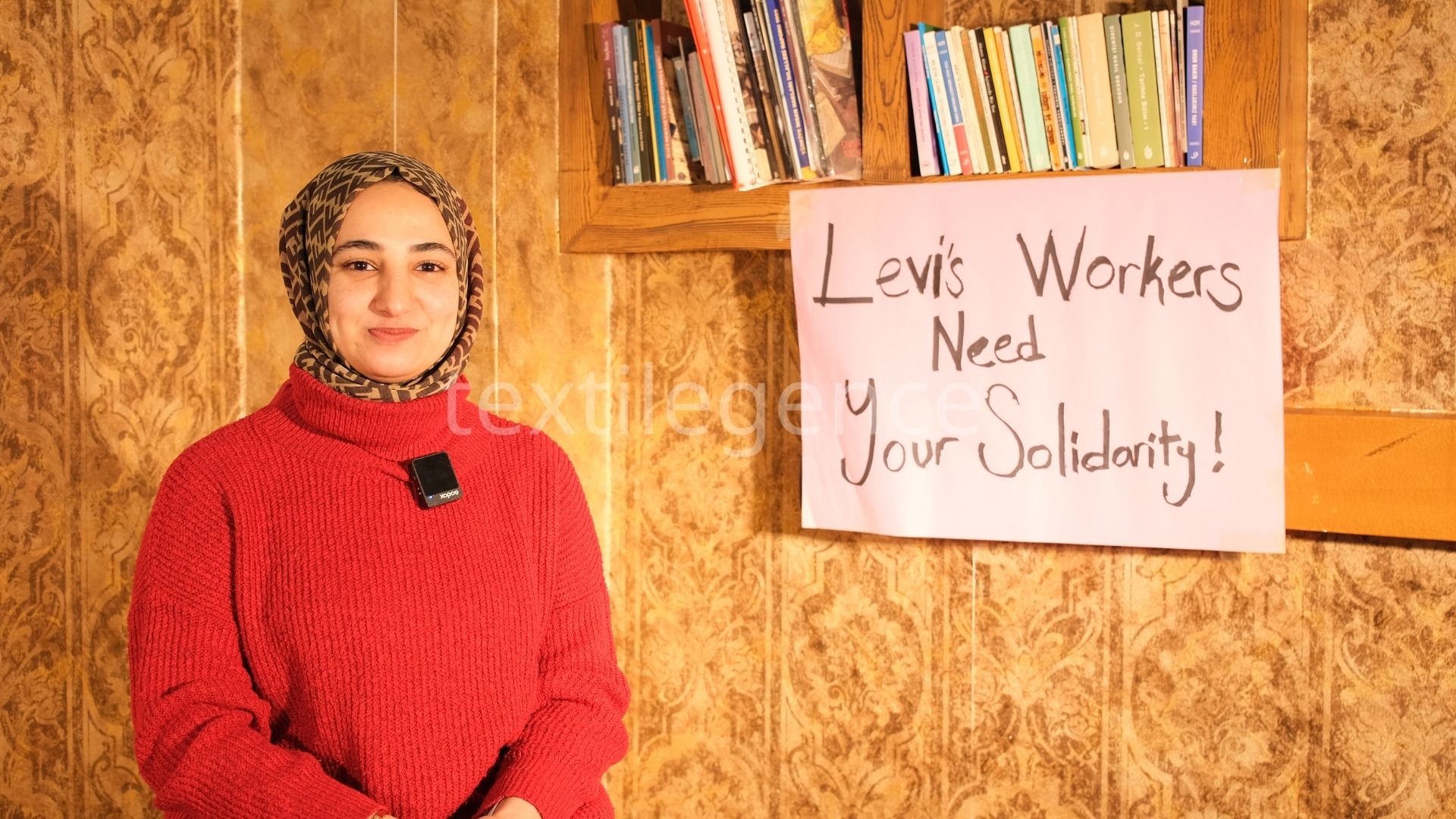

Together with a group of individual Levi’s consumers, the Netherlands-based foundation Clean Clothes Campaign (CCC) has launched a court case against Levi’s on 14 April 2026 for its misleading advertisements towards Dutch consumers. While Levi’s jeans carried labels claiming that they were made “responsibly” and the brand has stated on its website that it has “always stood up for what’s right”, CCC, however, argues that the reality is different.
CCC pointed to the Özak factory in Şanlıurfa, manufacturing for Levi’s, where it said that working conditions deteriorated significantly after management failed to take workers’ personal circumstances into account following the earthquake. The devastating earthquake that struck south-eastern Türkiye in February 2023 killed more than 50,000 people.
“Levi’s promised its consumers that its jeans are responsibly made and they stand up for what’s right. But I saw the reality is different,” said Bego Demir, founder of CCC Türkiye.
“Workers manufacturing for Levi’s punished over union activity and protests”
CCC argues that workers in Türkiye producing jeans for Levi Strauss were punished for joining a new trade union and taking part in peaceful protests demanding better pay and working conditions. “Provincial security forces tear-gassed, beat, pepper-sprayed and detained these workers. In retaliation, the factory management fired all 400 protesters.”
CCC underlined that Levi’s, as the only buyer in the factory, has significant influence over working conditions.
“Levi’s initially acknowledged that the events violated their code of conduct, but never followed through on requests made by workers and their representatives for reinstatement or compensation for the fired workers,” CCC said.
The case has drawn attention to the need for a transformation towards a fairer and more sustainable production system that centres workers’ rights.
In its forthcoming manifesto “Fashioning a Just Transition”, CCC calls for a ban on greenwashing and social washing, as well as stronger protection for workers’ freedom to organise in independent trade unions. CCC added that, if achieved, such measures could help prevent similar cases in the future.