



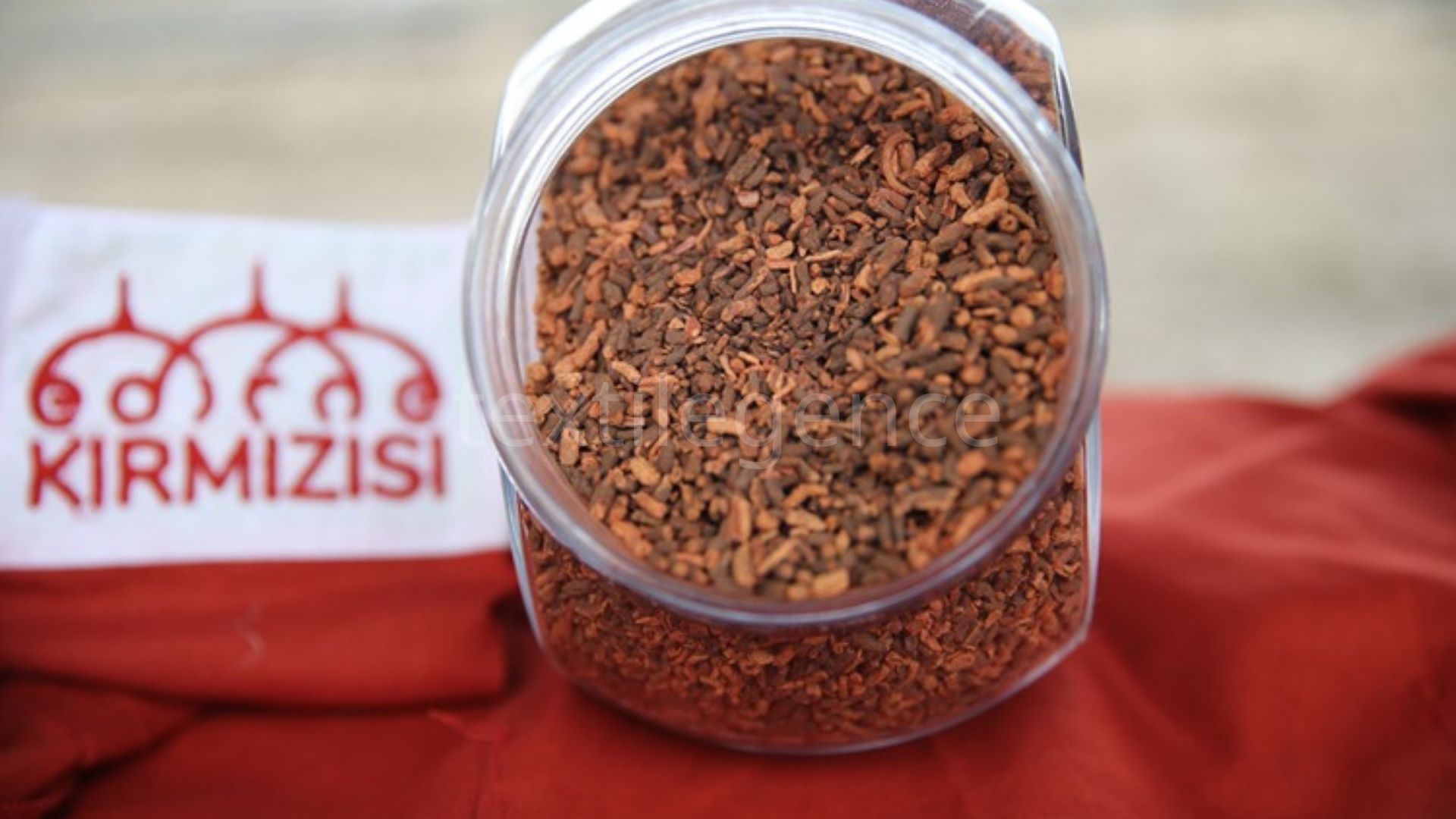

Produced during the Ottoman period, Edirne Red is being restored as one of the city’s economic and cultural values through ongoing efforts. Developed by dye masters in Edirne in the 15th century and later produced in France in the 1740s under the name “Rouge d’Adrinople,” the colour had long been forgotten with the rise of synthetic dyes during the Industrial Revolution.
In order to revive this unique color of the city, the Edirne Governorship, Edirne Municipality and Trakya University launched a project eight years ago, which has now started to bear fruit. Within this scope, promotional events, symposiums and scientific studies were organized, while trial cultivation of the Rubia tinctorum dye plant was carried out. The trial cultivation started in the Medicinal, Aromatic and Dye Plants Garden of the Trakya Agricultural Research Institute of the Ministry of Agriculture and Forestry yielded successful results. As part of the efforts to expand the cultivation of the plant across the province, harvesting began by tractor on ten decares of land planted by producer Şenol Ataç in the Uzunköprü district.
Thanks to the project led by Trakya University, a textile company has developed ties, scarves, clothes and souvenir products made from fabrics dyed naturally with pigments obtained from the plant. Thus, Edirne Red has once again become a cultural and economic value representing the city’s identity. Within this scope, it is aimed to expand cultivation areas and provide farmers with an alternative source of income.
The roots show good yield
Assoc. Prof. Dr. Adnan Tülek, Director of the Trakya Agricultural Research Institute, told an AA reporter that Edirne Red, obtained from the roots of the dye plant, attracts attention with its colour and natural structure. Tülek said, “Since interest in organic dyeing has increased in recent years, it has become more valuable. Important studies have been carried out to keep this cultural value alive and to restore it to its former significance.”
Explaining that they have carried out exemplary work for producers and started the cultivation of the plant, Tülek said: “We carried out the harvest in the established garden and saw that the root yield was good. It takes 2–3 years to reach sufficient root yield in the Rubia plant. Then the harvest process begins. After the harvested roots are dried and ground, they become suitable for dyeing and are sent to the textile industry for use.”
Producer Şenol Ataç stated that the textile industry has shown interest in Edirne Red and noted that the sector has started to turn toward natural dyes. Expressing that they will increase the cultivation areas in line with the demand, Ataç said, “We have enough seeds and seedlings. We also have land available for cultivation. The work we have done has given us good experience. The next stages will be even better. We obtained about 350 kilograms of dye roots per decare, and the yield increases over the years,” he said.