



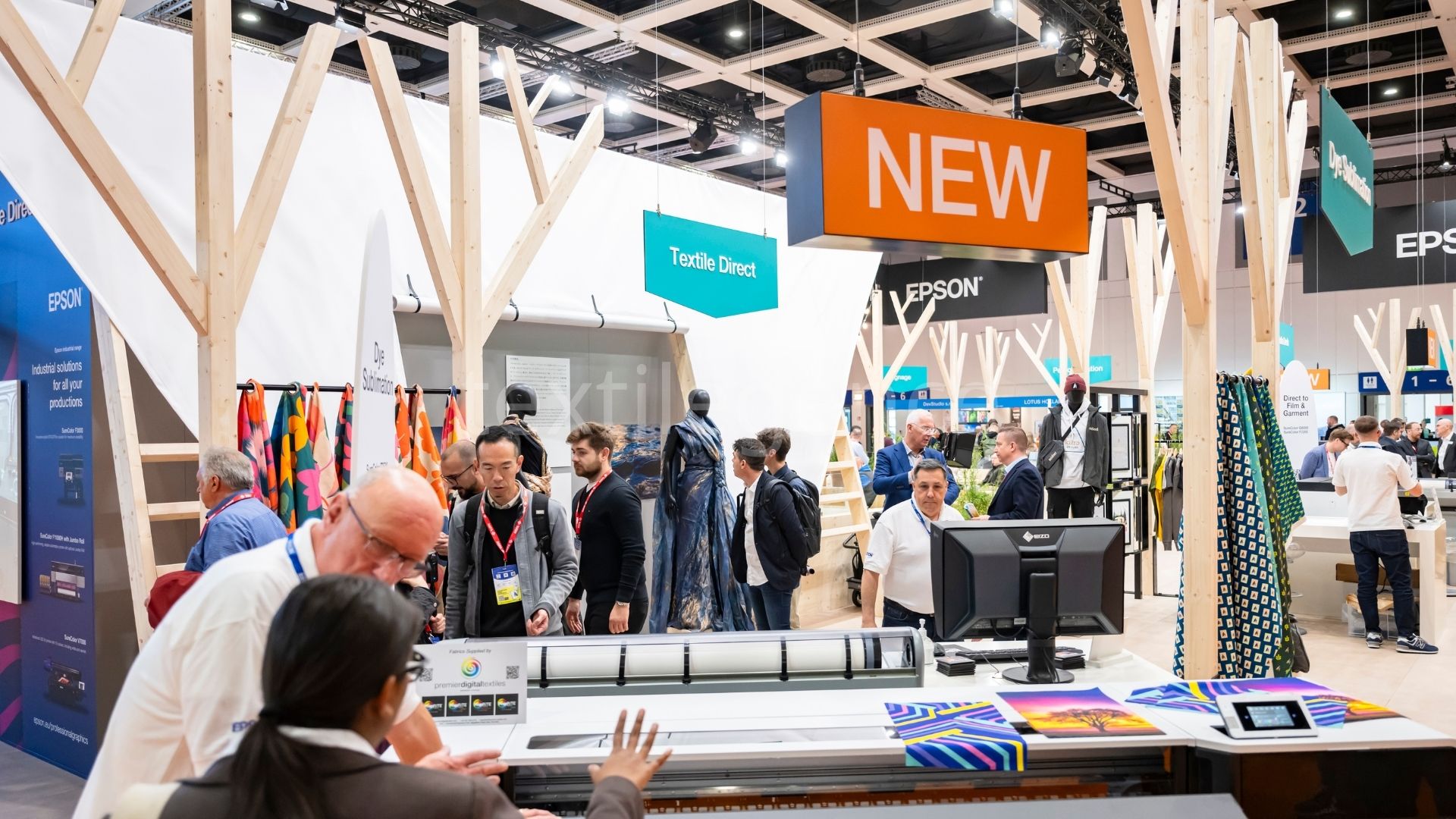

For more than 60 years, FESPA has brought together screen and, later, digital printers for companies producing textiles for fashion, sportswear, soft signage, and interior applications. With its new exhibition, Textile, FESPA strengthens its textile legacy for companies producing printed textiles for apparel and décor. Duncan MacOwan, Head of Marketing & Events, FESPA, said that Textile will allow the industry to address today’s very specific challenges and opportunities. He also shared details of the new event, which will be held simultaneously with FESPA Global Print Expo and other FESPA events.
What is the new Textile event from FESPA?
Textile is our new FESPA exhibition, which serves companies working with printed textiles for apparel and décor. The show focuses on printing for garments, sportswear, home and interior design textiles. It will take place alongside our other events – FESPA Global Print Expo, European Sign Expo, Personalisation Experience and the new Corrugated – at Fira de Barcelona from 19–22 May 2026.
We’ve created Textile as its own show, with a dedicated conference programme, so that textile printers, garment producers, brands and designers can find everything they need in one place. Visitors will be able to see new machinery, inks, materials and software, and hear practical insights from experts in the textile sector on how to improve efficiency and run production lines more responsibly.
And, because Textile sits within the wider FESPA umbrella, visitors can also learn from and interact with specialists in other areas such as signage, personalisation and packaging.
What is the target audience for the event? Is it broader than the textile printers who have traditionally visited FESPA Global Print Expo?
The core audience for Textile includes producers of printed textiles for fashion, sportswear, leisurewear, workwear, soft signage and interior décor. This also includes established screen and digital textile printers, DTG and DTF specialists, garment decorators, industrial print service providers, transfer manufacturers and any other print provider that would like to add textiles to their offering.
At the same time, we aim to broaden the reach beyond the textile printers who have traditionally visited FESPA Global Print Expo.
During the Textile event, we will also address the challenges that brands and retailers, sports and teamwear companies, designers, sourcing and production managers, fulfilment partners, e-commerce platforms and interior specifiers currently face. With this platform, we aim to provide them with the opportunity to explore and adopt more agile and environmentally responsible supply chains and find answers to those challenges.
Ultimately, Textile offers the chance to meet key suppliers and production partners in one place, understand what is technically possible and assess how digital, on-demand and nearshore production can support their business.

What can we expect from the event? Are there any particular exhibitors to look out for?
Visitors will have the opportunity to see a wide range of applications and equipment for the textile sector under one roof. This includes: roll-to-roll digital production equipment for fashion and home textiles; direct-to-garment and direct-to-fabric printing systems; workflow and design software; colour management and RIP solutions; embroidery and sewing; cutting and finishing equipment; pre-treatment and fixation systems; inks and coatings; materials; and garments.
Textile will also have its own dedicated conference programme. The sessions will focus on topics such as how to improve productivity, reduce waste, manage energy and resources more efficiently, and run a more responsible textile production business. Visitors will also hear insights directly from experts – including printers, manufacturers, brands and technology.
Confirmed exhibitors across the co-located events include: 3M, AGFA, Brother, Caldera, Durst, EFI, Hexis, Kongsberg Precision Cutting Systems, Kornit Digital, Mutoh, Summa, swissQprint, Transmatic and UPM. Many of these brands are recognised for their textile, direct-to-garment and direct-to-fabric solutions.
Textile can be accessed with the same ticket as FESPA Global Print Expo and its co-located events. This means that visitors can have a broader view of developments in graphics, industrial print, personalisation, signage and corrugated packaging – which may align with and support their textile business’s needs.
How does Textile build on FESPA’s previous textile heritage?
FESPA has always had a textiles heritage and this targeted event is the next step in that journey. For more than 60 years, our events have brought together screen and, later, digital printers producing textiles for fashion, sportswear, soft signage and interiors. In recent years, we’ve also added more content centred around sportswear, garment decoration and personalisation, reflecting how important these applications have become for the FESPA community.
Textile will allow us to cover the very specific challenges and opportunities that the sector faces today.
Visitors can expand textile connections via networking, also.
Can you tell us more about the Textile conference programme?
The Textile and Personalisation Experience conference will take place across four days of the show and will highlight insights such as how to improve productivity and efficiency, minimise waste and reduce environmental impact, and make better use of data and workflow automation across the textile production chain. These topics will be covered by textile technology providers, printers, garment manufacturers, suppliers, garment brands and designers.
The conference will also include panel discussions and demonstrations on: end-to-end digital workflows; responsible material choices; circular models for textiles; and how to run textile production with flexibility and speed in mind.
What trends do you expect to surface at the Textile event?
More and more textile businesses want to know how they can reduce waste and better manage their resources, so we expect sustainability to be a dominant topic at Textile. Visitors will be able to see inks and fabrics with lower impact, ways to cut water and energy use in their production models that will help them address these needs.
Another trend we are seeing is the move towards digital, agile and on-demand production. Companies want to know how they can offer shorter fashion cycles, grow their e-commerce platforms and adopt digital print, automated workflows and local or nearshore manufacturing.
As with previous years recently, we also anticipate seeing a lot of interest in personalisation and customisation, especially in sportswear, athleisure, merchandise clothing and interior décor. Textile businesses can gain a competitive edge by offering smaller runs, bespoke designs and faster delivery.
Textile will highlight how printers and brands are leveraging these trends, as well as the opportunities presented by customised products and collections.