



For over half a century, BTSR has been meeting yarn manufacturers’ need for high-quality, high-performance yarns, while offering innovative solutions in yarn monitoring and control with its electronic sensors and smart systems. BTSR has an international distribution network active in more than 40 countries, and in the Turkish market, its solutions have been offered over the years by its representative, Teksel Tekstil. We talked with BTSR Sales General Manager Angelo Rizzo about the BTSR’s Technologies that make difference in yarn performance and the advantages for the spinners.
Can you explain the key technological innovations behind the HYPERFEEDER system, and how they enhance yarn feeding performance?
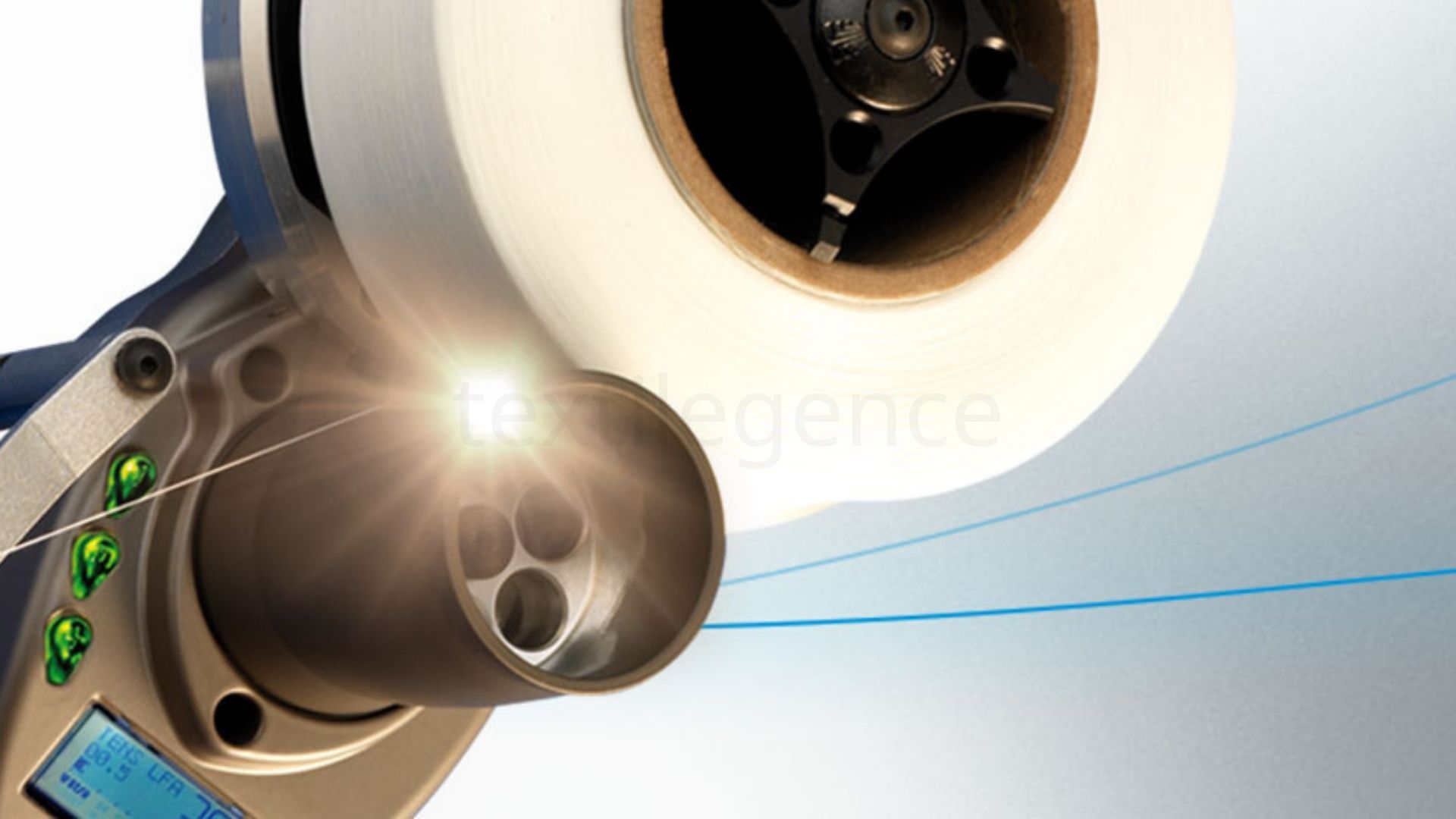
HYPERFEEDER is built on BTSR’s multi-patented concept of a “Positive Storage Constant Tension Feeder”. By combining storage and feeding in a single intelligent platform, it differs fundamentally from traditional systems.
With its magnetic ring, high-precision tension sensor and optical LFA measurement, the device continuously monitors and automatically corrects yarn tension. This ensures stability even during sudden speed variations, start-stop transitions or pattern changes.
Functions such as Tension Profiler, Graduation Compression and AUTO-LFA make it possible to create repeatable tension profiles for complex products such as compression socks and seamless garments. As a result, manufacturers achieve more uniform stitches, fewer yarn breaks and consistent quality across different machines.
IRIDIUM3D detects multiple yarn defects in 3 dimensions—how does this capability translate into improved quality control for manufacturers?
IRIDIUM3D employs an advanced CCD-based visual sensor that reads the yarn in three dimensions. Within its 6×6 mm 3D scanning area, it can simultaneously detect a wide range of defects including neps, slubs, added ply, missing ply and no-yarn conditions.
Beyond simple “pass/fail” evaluation, the sensor processes key data such as CV%, diameter variation, yarn speed and defect density. The resulting defect profiles provide manufacturers with a detailed map of the entire process.
This technology enables precise defect classification, faster root-cause identification, lot-level traceability and more accurate recipe optimization. It significantly enhances quality reliability—especially in high-speed winding operations and technical yarn production.
What distinguishes the MATRIX TOUCH Terminal System from other sensor management systems in the market?
MATRIX TOUCH is a high-resolution touchscreen control center designed for the management of BTSR sensors.
Its modular architecture can supervise up to 2,400 yarns, offering major advantages in sectors with dense yarn usage such as carpet production, warping, denim and tyrecord.
The self-learning “LEARN” function automatically recognizes the yarn sequence and continuously compares it throughout production, allowing early detection of broken ends, mis-threading and incorrect yarn take-up. Integrated with the PC-LINK Web platform, MATRIX TOUCH provides real-time data flow to upper-level systems, ensuring full Industry 4.0 compatibility.
Altogether, these features position MATRIX TOUCH not as a conventional sensor panel but as an advanced, application-specific production management tool.
How adaptable are these systems (e.g., HYPERFEEDER or IRIDIUM3D) for different yarn types and manufacturing sectors such as hosiery, medical textiles, or carpet production?
The entire BTSR platform—HYPERFEEDER, IRIDIUM3D, WINDING FEEDER, MATRIX TOUCH Terminal—is designed around full programmability, allowing it to operate with a very wide range of yarns and applications.
The systems support fine elastomers, covered yarns, cotton, technical fibers, as well as glass and carbon composite materials.
They can be applied seamlessly across hosiery, seamlesswear, medical compression, carpet/tufting, denim, winding, texturing, doubling and interlacing simply by adjusting the recipe. This adaptability offers a significant cost and efficiency advantage for multi-product manufacturing environments.
With advanced detection capabilities like “No Yarn” or “Slub+/-”, how does IRIDIUM3D support predictive maintenance or real-time process correction?
IRIDIUM3D’s multi-category defect classification plays a crucial role in real-time process control. As soon as defect density increases, the system alerts operators, enabling corrective action before the package is completed.
The Profiler function records diameter variations along the entire bobbin. When recurring patterns appear over time, maintenance teams can proactively identify potential issues such as guide wear, contamination, drafting irregularities or incorrect tension settings.
For this reason, IRIDIUM3D functions not only as a yarn clearer but also as a data-driven analytics platform supporting predictive maintenance.
Can you describe the role of tension ring colors (Blue, White, Red) in the HYPERFEEDER product line, and how users select the correct configuration?
The Blue, White and Red tension rings each represent different mechanical tension ranges. This color coding helps operators quickly select the correct physical configuration for the specific yarn type.
It also facilitates standardization across machines and facilities, ensuring that a production recipe can be identically reproduced on another line. When mechanical ring choice and electronic settings work together, tension accuracy is maintained at the highest level.
What feedback have you received from end-users regarding the integration of MATRIX TOUCH terminals in daily production environments?
User feedback can be summarized in three main areas:
Fast and error-free setup: Recipe management, automatic numbering and multi-feeder control significantly reduce setup times.
Clear visualisation: Real-time tension, LFA values, quality indicators and alarm graphics greatly accelerate troubleshooting.
Connectivity: Ethernet/WiFi capability and the Factory- based PC-LINK Web provide remote monitoring, helping many facilities adopt centralized production control for the first time.
How do optional components like the HPF/WAX or AIRJET cleaning systems improve the long-term functionality and efficiency of your devices?
HPF/WAX uses a motor-controlled waxing mechanism that optimizes yarn surface lubrication, reducing breaks, plating issues and friction-related defects.
AIRJET-type cleaning solutions prevent lint, dust and oil accumulation on sensors and guides, helping retain long-term measurement accuracy.
These optional accessories (working only in combination with a BTSR device) reduce machine stoppages and maintain stable feeder and sensor performance over extended operating periods.
In terms of data communication, how do your systems (e.g., via PROFINET, ETHERNET/IP, EtherCAT) ensure compatibility and scalability within Industry 4.0 environments?
BTSR solutions are engineered to operate seamlessly with open industrial communication protocols. TS-series sensors and MATRIX TOUCH terminals connect to plant networks via Ethernet or WiFi, while PC-LINK Web centralizes all production data for monitoring, reporting, maintenance planning and archiving.
This architecture allows facilities to start with a small installation and scale effortlessly to full-plant integration over time.
Looking ahead, what future enhancements or R&D efforts are you focusing on to maintain leadership in yarn feeding and quality monitoring technologies?
BTSR’s R&D strategy centers on three key directions:
Advanced digitalization and Industry 4.0 integration – enabling full-plant data collection, analysis and automatic process optimization.
Self-adaptive intelligent algorithms – systems that autonomously optimize tension, LFA, defect classification and machine settings.
Sector-specific solutions – further expansion into nonwoven, hygiene products, carbon/glass fiber applications and other advanced technical textiles with increasingly modular platforms.