



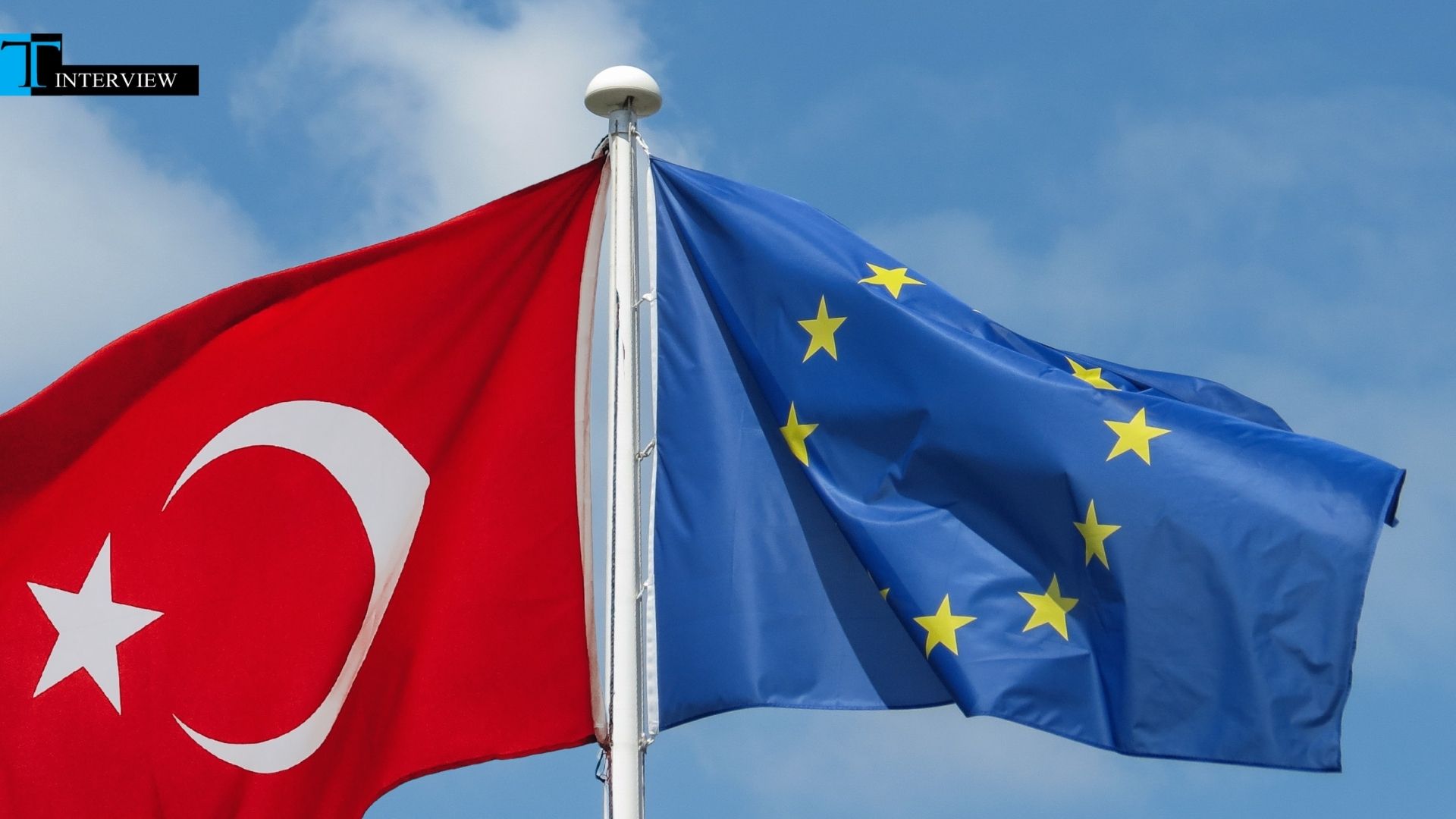

As the EU’s second-largest supplier of textile products after China, Türkiye faces growing competitive pressure from new EU free trade agreements (FTA) with third countries, particularly India. Recent developments in the EU — the largest market for the Turkish textile and apparel industry — have once again brought the modernisation of the EU–Türkiye Customs Union back onto the agenda.
Trump-era protectionist tariffs and mounting U.S.–China trade tensions prompted the EU to diversify its trade partners—a strategic move that proved pivotal in reviving the EU–India and EU–Mercosur free trade agreements.
As these deals reshape Europe’s textile trade landscape, The European Textile and Apparel Confederation – EURATEX Director General Dirk Vantyghem stresses the need to modernise the EU–Türkiye customs union to reflect today’s trade realities.
Vantyghem: “Türkiye is and will remain a strategic partner for the European textile and clothing industry”
We asked Dirk Vantyghem how these agreements could affect European textile manufacturers and EU-Türkiye relations.
On the potential impact of the EU-Mercosur FTA on EU-Türkiye economic relations, Vantyghem said: “Türkiye is and will remain a strategic partner for the European textile and clothing industry. It is one of the EU’s closest and most integrated suppliers, with strong industrial complementarities, short lead times, and deep value-chain integration.”
He stressed that the EU–Mercosur agreement does not alter this fundamental relationship, adding: “EURATEX does not see it as a substitute for EU-Türkiye cooperation, but rather as part of a broader EU trade policy aimed at diversification. EURATEX will continue to work actively on the preservation and strengthening of EU–Türkiye economic relations.”

“We continue to advocate for the modernisation of the EU-Türkiye customs union”
The EU–India FTA is expected to weaken the competitive position of the Turkish textile industry vis-à-vis India, another major global textile producer. Under the agreement, tariffs on more than 96% of EU goods exports are to be eliminated or reduced.
When asked about the agenda for modernising the EU-Türkiye customs union, he commented: “As far as it concerns EURATEX, we continue to advocate for the modernisation of the EU-Türkiye customs union, as it needs to be updated to reflect the new state of trade and market surveillance, to keep trade between the two as smooth and frictionless as possible, especially as Türkiye is one of our most important trade partners.”
EU–Mercosur: No import pressure, new export opportunities
Asked about concerns over the EU–Mercosur FTA’s potential negative effects on European manufacturers, Vantyghem pointed out that Mercosur is not a major producer or exporter of finished textiles and apparel to the EU, especially when compared with other FTA partners.
“Its textile industry is largely oriented towards domestic and regional markets, and production costs are not structurally competitive with EU manufacturing in the same way as in Asia. For this reason, we do not expect the agreement to trigger significant import pressure on EU textile and clothing manufacturers,” he said.
On the contrary, he emphasised the benefits of the agreement: “Mercosur represents a large and growing consumer market with traditionally high tariffs on apparel. Reducing these barriers improves opportunities for European manufacturers and brands to export higher-value products. This is where EURATEX sees the main interest for the sector.”
On how the sector is preparing for this new phase, Vantyghem underlined the importance of quality, innovation, sustainability and brand value:
“That said, EURATEX always stresses the need for effective enforcement of trade rules, including rules of origin and sustainability commitments, to ensure a level playing field. The industry is preparing for this new phase by focusing on quality, innovation, sustainability, and brand value, areas where European textiles remain highly competitive.”
“Europe must continue to defend a rules-based multilateral trading system”
On the future of European textile producers amid growing geopolitical tensions and trade uncertainty, Vantyghem said diversification is essential.
“Trade agreements such as EU–Mercosur contribute to reducing dependency on a limited number of markets and suppliers, while reinforcing the EU’s role as a global trading actor.
At the same time, openness must go hand in hand with fair competition. The European textile industry supports free trade, but only if it is accompanied by effective enforcement, reciprocity, and a level playing field on environmental and social standards.
Taking into account developments in the United States, including the more unilateral trade approach seen under the Trump administration, Europe must continue to defend a rules-based multilateral trading system, notably through the WTO, while pragmatically expanding its network of trade partners.
For European textile producers, the future lies in strategic openness: being present in global markets, managing risks through diversification, and competing on innovation, sustainability, and quality rather than cost alone.”