

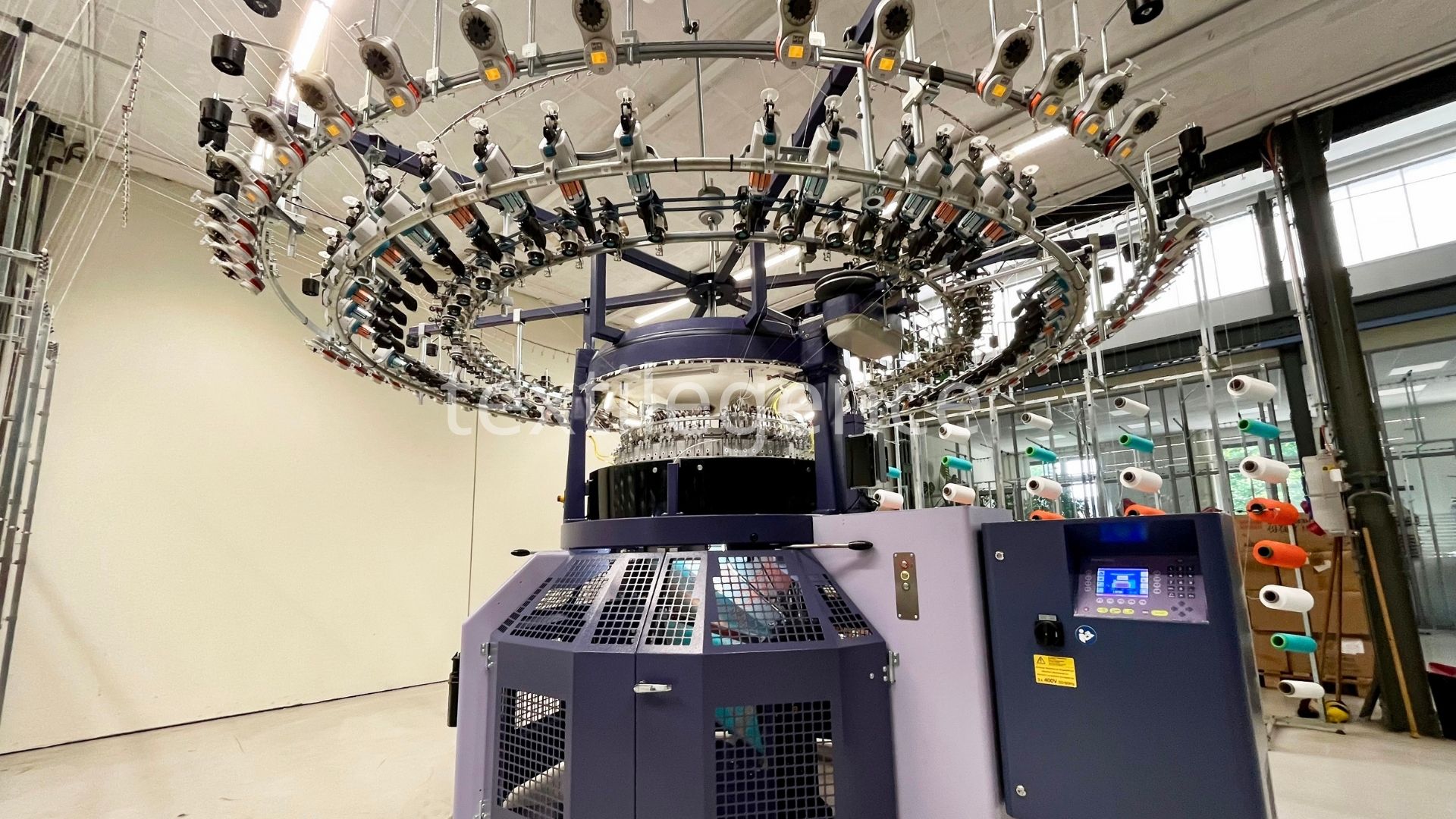

Terrot Textilmaschinen GmbH has introduced the new T-Frame, a universal machine frame platform developed for large-diameter circular knitting machines, as manufacturers face growing pressure to increase production flexibility while maintaining consistent fabric quality under tightening cost and labor conditions.
Across the global circular knitting industry, producers are seeking more modular and adaptable machine architectures capable of responding quickly to shifting order volumes and shorter product cycles. At the same time, expectations around operational safety, ergonomic design and long-term equipment efficiency continue to rise.
Against this backdrop, Terrot’s newly engineered T-Frame platform aims to provide a stable and future-ready structural foundation for current and next-generation knitting machines. The platform combines mechanical robustness with a modular design approach intended to support both operational flexibility and long-term investment security.
Redesigned frame architecture for industrial production demands
The tubular machine frame has been developed using premium-grade steel to handle higher mechanical loads while improving machine accessibility and structural precision. Building on nearly three decades of experience in large-diameter circular knitting machine development, Terrot states that it has fully redesigned the frame architecture to meet evolving industrial requirements.
Available in multiple frame sizes and configurations for large-diameter tubular circular knitting machines, the T-Frame is positioned as a universal platform capable of supporting a range of machine setups and production scenarios.
In daily manufacturing environments, Terrot highlights several operational advantages linked to the platform. A single universal frame structure allows manufacturers to adapt more quickly to changing fabric specifications, while increased structural stability is designed to support knitting precision at industrial speeds, particularly for diameters ranging from 26 to 54 inches. Standardised components and improved accessibility are also expected to simplify maintenance procedures and reduce setup times.
The company further notes that integrated cable management and a reduction in external attachments aim to minimise potential failure points, contributing to longer-term process stability. Designed with future machine generations in mind, the platform is intended to provide a scalable base for ongoing technological developments in circular knitting.