




When it comes to thermal comfort, textiles are generally designed for managing sweating. In line with this reactive approach, moisture wicking fabrics transport sweat away from the skin, while cooling finishes create a temporary sensation of freshness. Outlast, a temperature specialist in the textile sector, offers a proactive solution.
Outlast® Temperature Regulation technology is designed to act before sweat forms and actively manage heat at the microclimate between the skin and the textile, rather than simply transporting moisture.
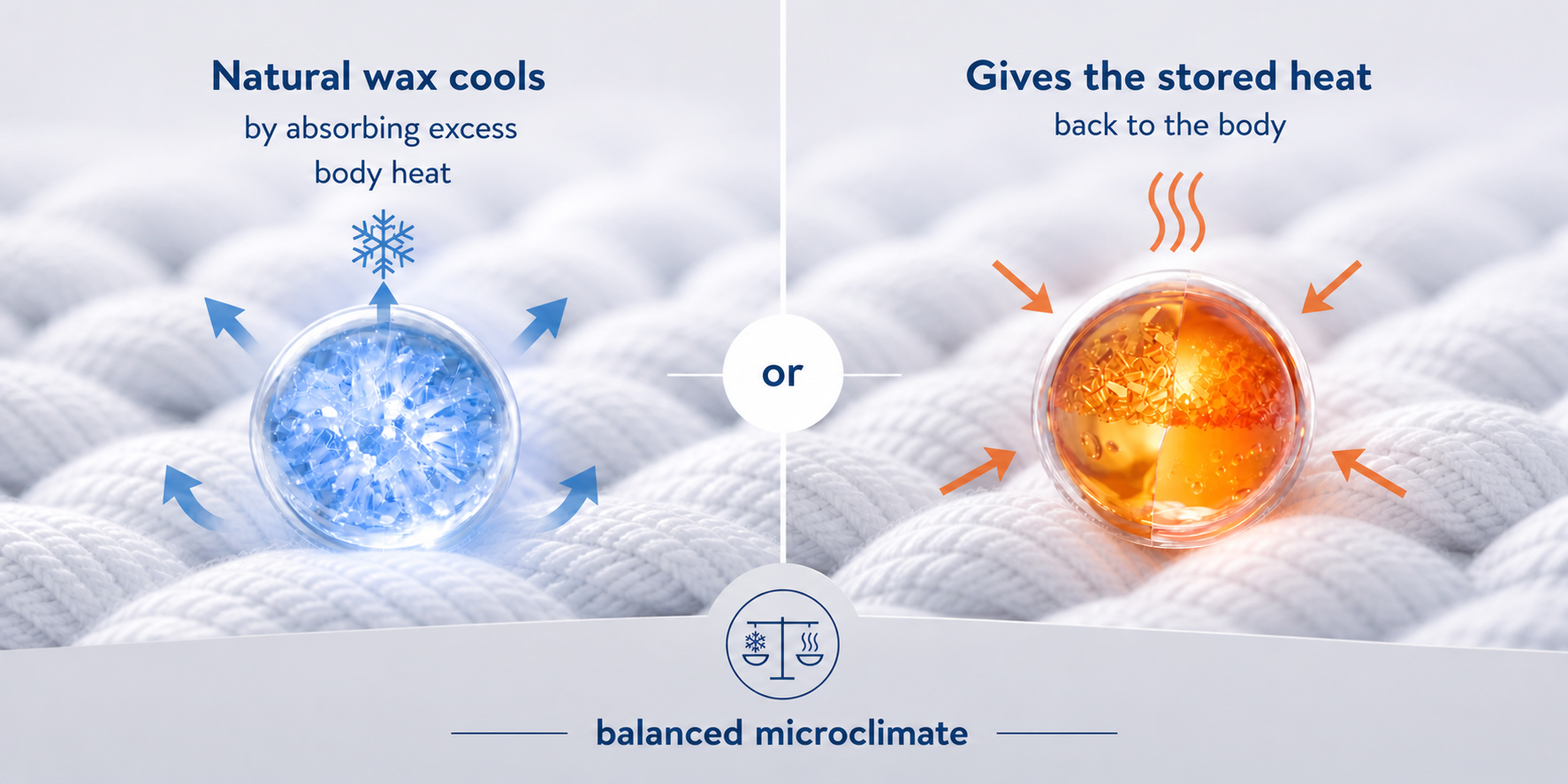
At the core of Outlast® technology is microencapsulated natural wax integrated directly into textiles. These materials absorb excess body heat, store it, and release it again when the temperature drops.
The effect is a buffering of temperature peaks. Instead of overheating quickly and then cooling down abruptly, the wearer experiences a more stable, balanced microclimate. The result is reduced overheating, less sweat formation, and increased comfort over time.
Independent tests show that this approach can reduce moisture build-up by up to 24% in apparel applications and by as much as 48% in bedding compared to conventional materials.
Comfort that lasts – not just a moment
In warm climates, many textile solutions focus on an immediate cooling effect. While this can feel refreshing at first, the sensation often fades quickly, leaving the wearer exposed to heat buildup again.
True performance, however, is defined by consistency. Outlast® technology is not based on a short-term cooling sensation. It is designed to continuously regulate temperature throughout use — whether during physical activity, long working hours, or rest.
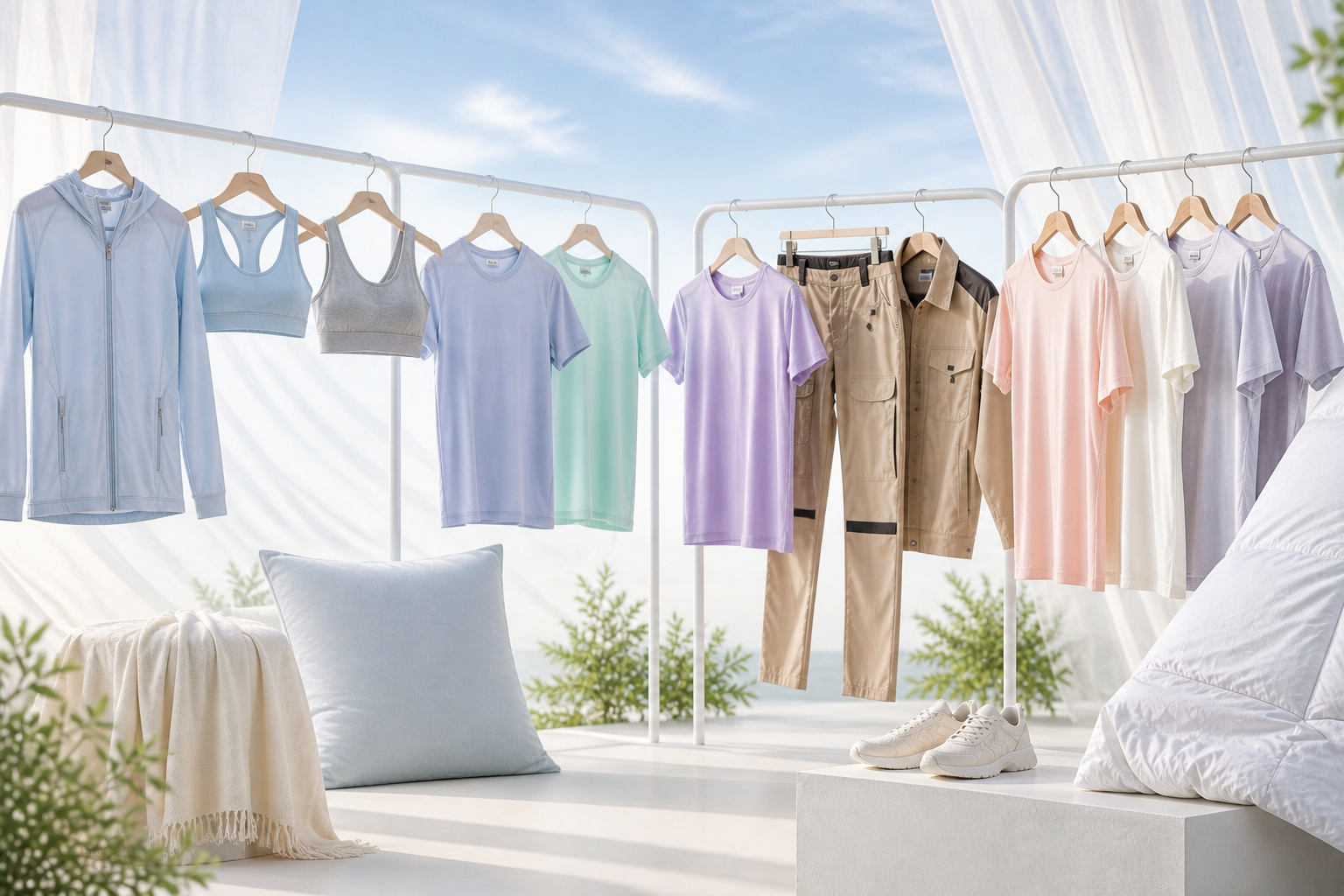
This makes it particularly relevant for activewear, where physical activity levels fluctuate significantly; for workwear, where long-term comfort influences performance; for everyday apparel, where comfort enhances overall well-being; and for bedding products, where temperature stability contributes to better sleep.
Suitable for different applications
One of the key advantages of Outlast® Temperature Regulation is its versatility. Depending on the application and desired performance profile, manufacturers can integrate the technology into textiles in multiple ways.
Coated materials provide the highest heat storage capacity and support applications in bedding, footwear, and outerwear.
Fiber-based solutions integrate temperature regulation directly into yarns, making them ideal for next-to-skin garments such as T-shirts, underwear, and base layers. In addition, Outlast® fibers are suitable as filling materials, for example in bedding products or insulating applications.
Functional finishes, such as fresh2SKIN®, provide an additional cooling effect. The technology integrates efficiently into a wide range of materials, including cotton and other cellulose-based fibers, while maintaining the original hand feel of the textile.
This flexibility allows brands and manufacturers to tailor performance precisely to their product category and target consumer.
Durability as a key performance factor
In many markets, maintaining functionality after repeated washing remains a common challenge. Cooling effects fade, finishes wear off, and performance becomes inconsistent over time. Outlast® technology is designed for long-lasting performance. By embedding the functional components directly into fibers or securely integrating them into the textile structure, Outlast® ensures reliable performance throughout the entire product lifecycle. This is not only a technical advantage – it is also a critical factor for brand credibility and consumer trust.
A new standard for thermal comfort
As global temperatures rise and consumer expectations evolve, the textile industry is facing new challenges. Comfort is no longer defined by fabric softness or moisture management alone. It is about how effectively a textile supports the body in dynamic conditions. Proactive temperature regulation represents a new standard – one that moves beyond reacting to symptoms and instead addresses the root cause of discomfort: heat buildup. By stabilizing the microclimate before sweating begins, textiles can fundamentally improve how garments feel and perform.