




Under Section 301 of the Trade Act of 1974, the United States (U.S.) has introduced new additional tariffs ranging from 10% to 12.5% on imports from 60 trading partners. Pursuant to the decision, which was taken on the grounds that these countries “have failed to prohibit or effectively enforce a ban on the importation of goods produced wholly or in part with forced labor,” Türkiye is among the countries subject to an additional 12.5% tariff.
However, the fact that countries such as Bangladesh and Cambodia, which are among Türkiye’s strongest competitors in the textile, apparel and garment industries, will be subject to a 10% tariff, and that four countries, including these two, have been conditionally offered an exemption from the Section 301 tariff, has placed Türkiye at a disadvantage in the global market.
Countries subject to a 10% tariff:
Argentina, Bangladesh, Cambodia, Canada, Ecuador, El Salvador, Guatemala, Honduras, India, Indonesia, Jordan, Malaysia, Mexico, Pakistan, Sri Lanka, Trinidad and Tobago, the United Kingdom, the European Union (EU), and Taiwan.
If the customs duty rate applicable to a product originating in the European Union or Taiwan is lower than the 10% Most-Favored-Nation (MFN) tariff rate, an additional tariff will be applied so that the total customs duty reaches 10%.
If the MFN tariff rate applicable to the product is 10% or higher, no additional tariff will be imposed.
Countries subject to a 12.5% tariff:
Japan, South Korea, Switzerland, China, Hong Kong, Australia, New Zealand, the Philippines, Singapore, Thailand, Vietnam, Türkiye, Russia, Norway, Kazakhstan, Bahrain, Egypt, Iraq, Israel, Kuwait, Libya, Morocco, Oman, Qatar, Saudi Arabia, the United Arab Emirates, Algeria, Angola, Nigeria, South Africa, the Bahamas, Brazil, Chile, Colombia, Costa Rica, the Dominican Republic, Guyana, Nicaragua, Peru, Uruguay and Venezuela.
If the customs duty rate applicable to a product originating in Japan, South Korea or Switzerland is lower than the 12.5% Most-Favored-Nation (MFN) tariff rate, an additional tariff will be applied so that the total customs duty reaches 12.5%.
If the MFN tariff rate applicable to the product is 12.5% or higher, no additional tariff will be imposed.
The U.S. is one of Türkiye’s growing export markets
While Turkish textile and apparel industry has been struggling with weakening demand in the European market in recent years, it has adopted a strategy of diversifying its export markets during this period. In this context, the U.S. has emerged as one of the fastest-growing markets for Türkiye.
According to data for the January-April 2026 period, the U.S. ranked first in Türkiye’s technical textile exports and second in home textile exports.
In the first half of the year, the U.S. also became the second-largest destination for Türkiye’s textile exports. During this period, textile exports to the country increased by 14% year-on-year to USD 409 million.
“Special tariff” for Bangladesh, Cambodia, Indonesia and Malaysia
The decision also includes a special mechanism for the textile and apparel industry that applies only to Bangladesh, Cambodia, Indonesia and Malaysia.
Under this mechanism, these countries will be able to benefit from tariff-rate quotas allowing them to export certain quantities of textile and apparel products to the United States without being subject to the Section 301 tariff, provided that they use U.S.-origin cotton or textile inputs.
The tariff-rate quota system, which is expected to remain in effect for an initial period of three years, is envisaged to become operational no earlier than September 1, 2026.
“The real issue is that Turkish industry is being systematically placed at a disadvantage against its competitors”
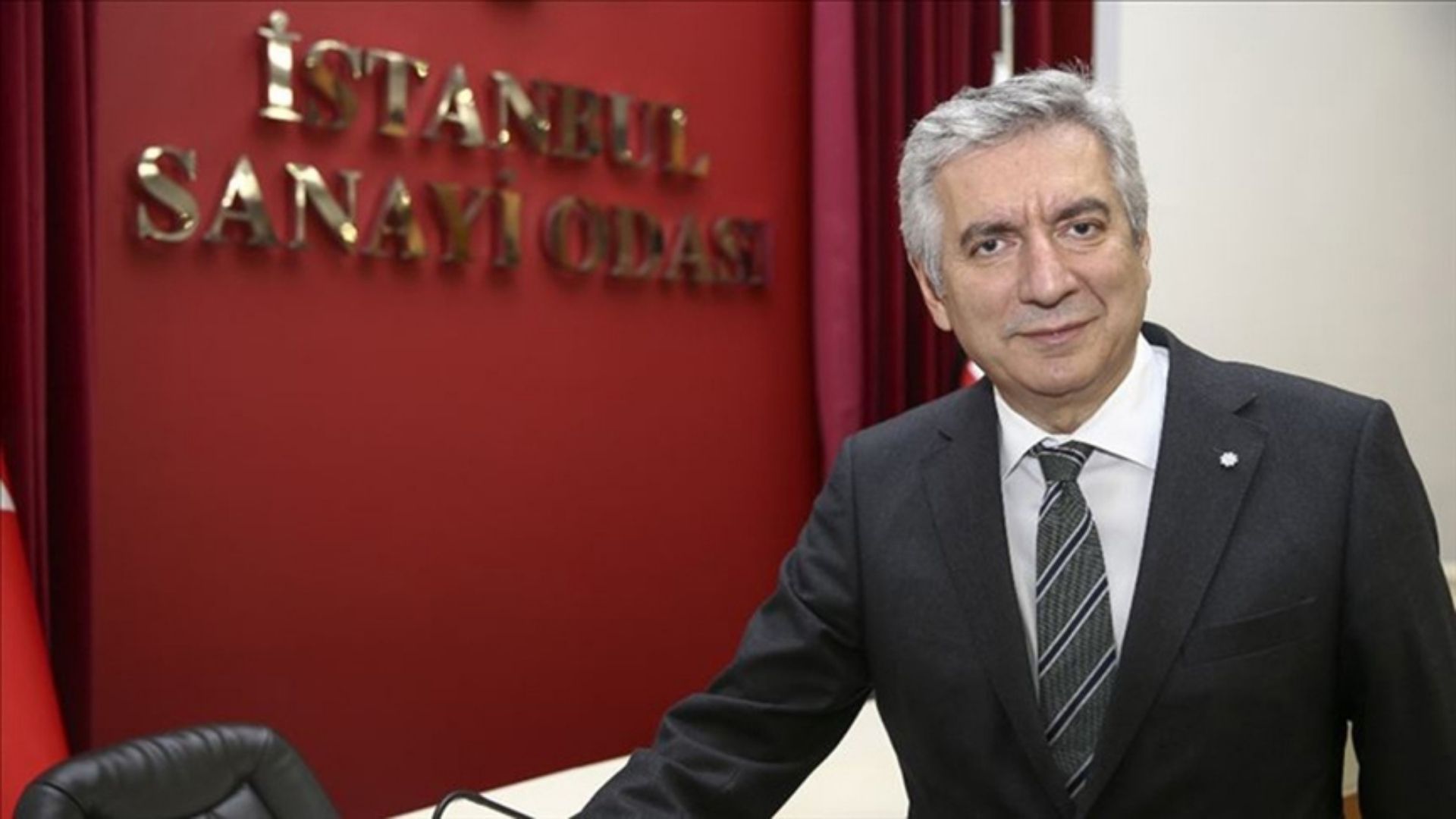
Commenting on the additional tariff decision by the U.S. administration, which directly concerns Türkiye’s textile, apparel and garment industries, Erdal Bahçıvan, Chair of the Board of the Istanbul Chamber of Industry (ISO), said: “This is not merely a matter of an additional tariff. The real issue is that Turkish industry is being systematically placed at a disadvantage against its competitors.”
He argued that the reduced tariff rates, tariff advantages and duty-free tariff-rate quotas granted to certain competing countries under the same regulation create a clear imbalance in competition for Türkiye: “While additional tariff rates have been reduced for countries such as Bangladesh, Cambodia, Indonesia, Malaysia, Pakistan and India, and while the European Union, Taiwan, Japan, South Korea and Switzerland have been granted ceilings on their overall tariff burden, Türkiye has been left outside this framework. This is not fair.”
“The total customs duty burden could rise to 25-30%”
Bahçıvan stated that the absence of a similar ceiling for Türkiye, combined with the fact that the additional 12.5% tariff will be imposed on top of the existing duties, could result in the total customs duty burden on textile, apparel and garment products rising to 25-30%.
Noting that Türkiye is not among the countries with a structural and substantial trade surplus with the United States, Bahçıvan said it does not reflect economic realities for Türkiye to be treated in the same way as some countries that do run such trade surpluses. “At a time when our industries are looking to the U.S. as an alternative market with strong growth potential due to the contraction in the European market, placing them at a greater disadvantage than their competitors is deeply concerning,” he stated.
Emphasizing that the textile, apparel and garment industries are far more than ordinary manufacturing sectors for the Turkish economy, the ISO Chair said: “These industries are strategic pillars in terms of production, employment, exports, regional development, women’s employment, the SME ecosystem and supply chains. Therefore, any regulation that weakens their competitiveness will affect not only export figures, but also our production centres, employment capacity, regional development and the resilience of our industrial ecosystem.”
“Türkiye-U.S. negotiations are of great importance”
In light of these developments, Chair Erdal Bahçıvan stated that they attach great importance to the new negotiation process expected to begin between Türkiye and the United States. He said the talks should comprehensively address customs duties, the overall tariff burden, duty-free tariff-rate quotas, rules of origin, traceability and legislation concerning forced labour.
Bahçıvan also said they expect the relevant public authorities to undertake strong, determined and result-oriented initiatives to ensure that Türkiye is included in the duty-free tariff-rate quota system, that a ceiling is introduced for the overall tariff burden, and that the country is reassessed in line with its actual trade realities.
“We demand equal competitive conditions”
“We are not asking for preferential treatment. We are asking for equal competitive conditions. Turkish industry competes through quality, production capability, on-time delivery, flexible manufacturing, sustainability investments and the trust built over many years. However, no country’s industry can demonstrate its true strength on an uneven playing field,” Bahçıvan said, adding that protecting Türkiye’s manufacturing strength, export capacity and the competitiveness of its industrialists is not merely a sectoral issue but a strategic responsibility for the country’s economic future.
“Price pressure in the European market may increase”
Commenting on the issue to Bloomberg HT, Osman Uğurlu, Chair of the Denizli Exporters’ Association, argued that the new tariff arrangement would challenge the competitiveness of Turkish exporters while also drawing attention to potential indirect developments in the European market: “The high customs duties imposed on China may lead Chinese manufacturers to seek alternative markets. This could intensify price pressure, particularly in the European market, creating additional pressure on the competitiveness of Turkish exporters.”