



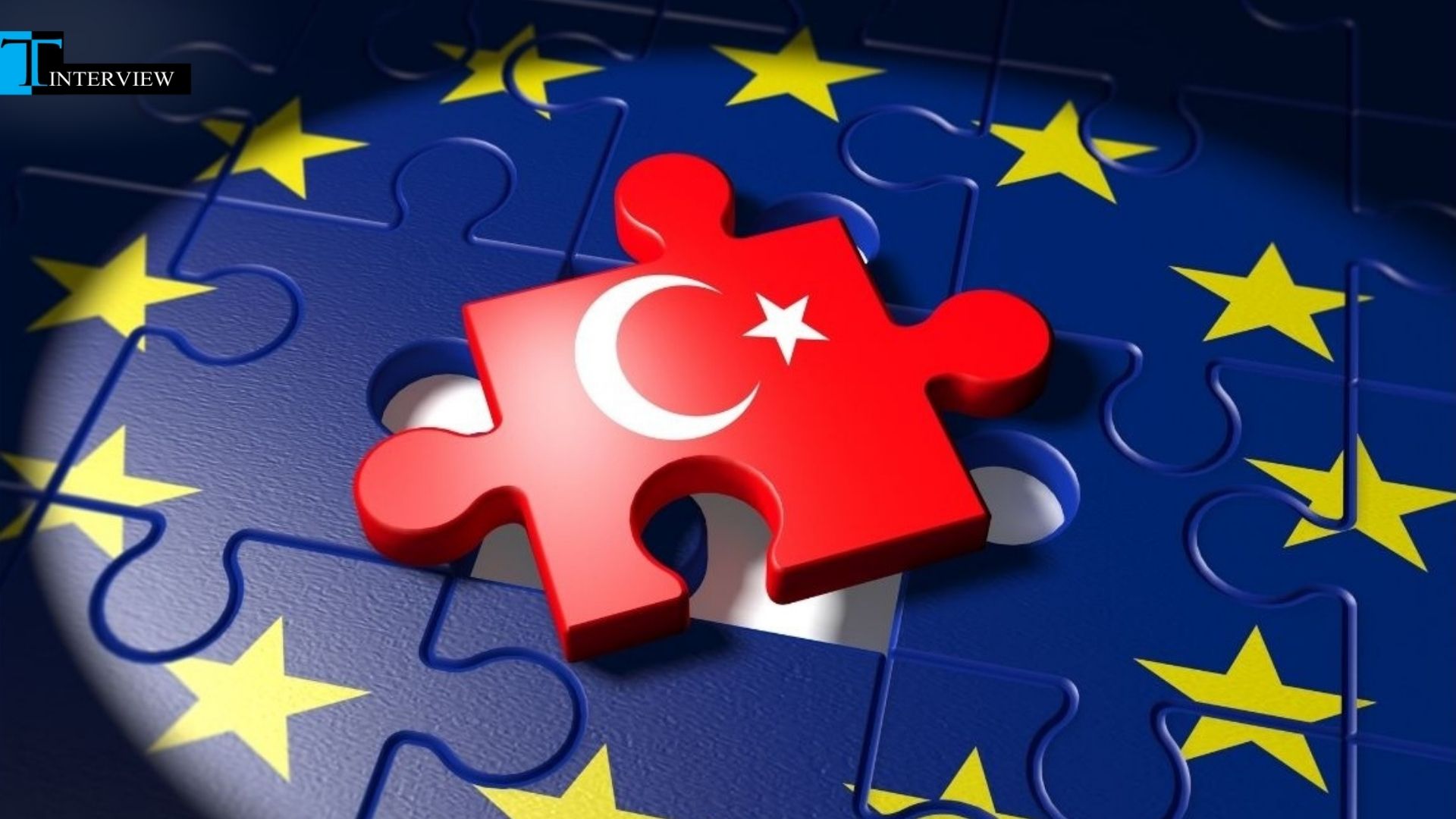

Global trade, reshaped by the free trade agreements signed by the European Union in January, is altering the competitive balance in Europe — Türkiye’s largest export market. The customs advantages India will gain through its agreement with the EU, along with emerging new trade blocs, are leading Türkiye to reassess its position in the global textile supply chain. In an exclusive statement to Textilegence, ITHIB Board Chairman Ahmet Öksüz said that in the new period the Turkish textile industry should position itself through market diversification, branding and strategic partnerships.
Highlighting the new era in which regionalisation and strategic collaborations are gaining prominence in global trade, Öksüz said: “There appears to be no way out other than the textile industry increasing market diversification and fully focusing on branding and innovation.”
New FTAs are reshaping competitive dynamics
Free trade agreements signed by the EU in recent years are creating a new competitive landscape in global textile trade. While the agreement signed between the European Union and MERCOSUR countries is ushering Latin America into a new phase of integration, the EU–India FTA — signed after nearly 20 years of negotiations — is planned to enter into force in 2027. These developments are creating new competitive pressure for Türkiye, particularly as India will gain lower-cost access to the EU market.

“Türkiye should also sign an FTA with MERCOSUR”
Öksüz emphasised the importance of Türkiye–EU trade relations for the industry, saying: “In 2025, around 40% of our approximately USD 11.4 billion textile exports went to the European Union. We are Europe’s second-largest textile supplier and hold a 14% share of the EU’s textile imports.”
Pointing out that the MERCOSUR region — comprising Argentina, Brazil, Paraguay and Uruguay — ranks as the sixth-largest economy outside the EU with a population of 270 million and a GDP of around EUR 3 trillion, he stated that Türkiye has been unable to fully realise its potential in these markets due to high customs duties. He noted that Türkiye’s exports to the region remain at USD 57 million despite Brazil’s annual textile imports of USD 4 billion and Argentina’s nearly USD 1 billion, saying: “The EU–MERCOSUR FTA may have indirect effects; however, for lasting benefits, Türkiye also needs to sign a free trade agreement with MERCOSUR.”
Türkiye faces the risk of losing its duty-free export advantage against India
He reminded that once the EU–India FTA enters into force India will soon be exempt from customs duties exceeding 10% in textiles and apparel; “As a result, we will lose the duty-free export advantage we currently have over India thanks to the Customs Union,” he said.
——————–
With USD 19 billion in textile exports, India is the world’s second-largest textile exporter, accounting for 5.4% of global textile exports. As the EU’s fourth-largest textile supplier, the country achieved a 7.3% share of the EU’s textile imports with exports worth EUR 1.5 billion in the January–August period.
——————–
Referring also to the indirect impacts of the agreement, Öksüz warned of the risk of Indian-origin products entering Türkiye via the EU through trade deflection. He noted that although Türkiye is part of the Customs Union, it is not an EU member and therefore does not participate in the EU’s FTA negotiations, yet it is directly affected by the agreements signed.
“A Preferential Trade Agreement with the US must be implemented immediately”
Öksüz stressed that Türkiye needs to develop alternative strategies against potential losses in the EU market, saying that a Preferential Trade Agreement with the United States should be implemented promptly. He noted that India could achieve rapid growth with zero-duty access to the EU market and argued that the Customs Union should also be urgently modernised to preserve Türkiye’s competitiveness.
Acquisitions in target markets could create new opportunities
Stating that while maintaining its position as a “producer country,” the Turkish textile sector should evolve towards an “organiser country” model, Öksüz said that acquiring companies facing financial difficulties in target markets could create strategic opportunities.
“Under the leadership of our government, it may be possible for several companies to come together to carry out these acquisitions. The key issue here is collective action. In this context, we need an incentive mechanism and guidance from our Ministry of Trade. If we succeed, we will gain advantages in entering target markets and have the opportunity to be actively present in distribution channels there. In this way, we will contribute to sustainable export growth and elevate the perception of the Turkish textile industry to a much higher level,” said Öksüz, adding that such opportunities are possible in markets such as the US, Germany, Italy, the UK and Spain.
He also recalled that many sovereign wealth funds worldwide are acquiring brands and stated that Türkiye Wealth Fund adopting similar strategies could take the branding process of the Turkish textile and apparel industry to a different level.
Growth in technical textiles continues
Noting that the Turkish textile industry has made significant progress in technical textiles over the past decade, Öksüz said that technical textile exports reached USD 2.3 billion in 2025, marking a 3% increase. He added that international partnerships and acquisitions in technical textiles would provide not only export and capacity growth but also the transfer of know-how.
Related news: EURATEX: “The EU–Türkiye Customs Union Needs to Be Updated”