

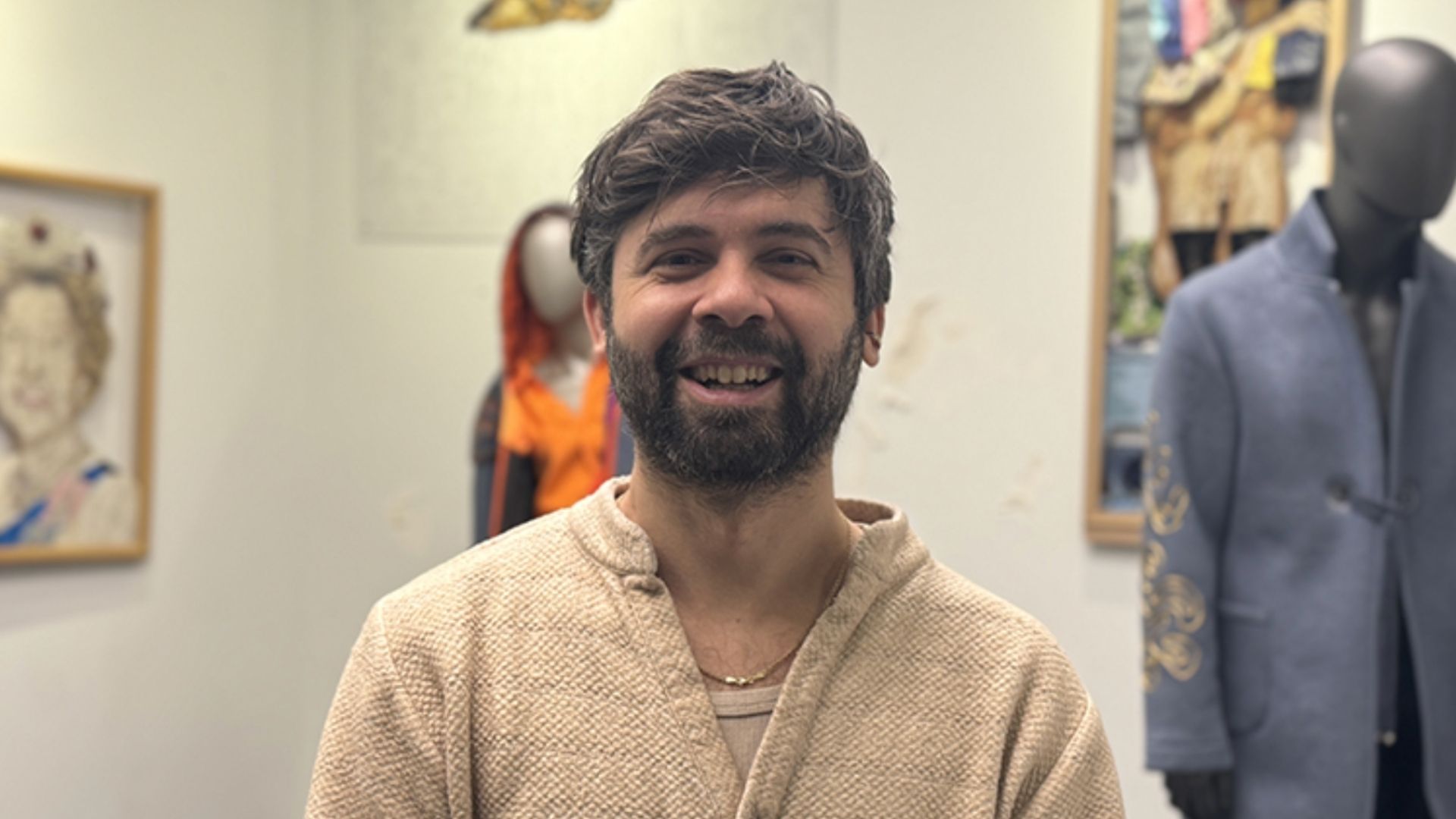

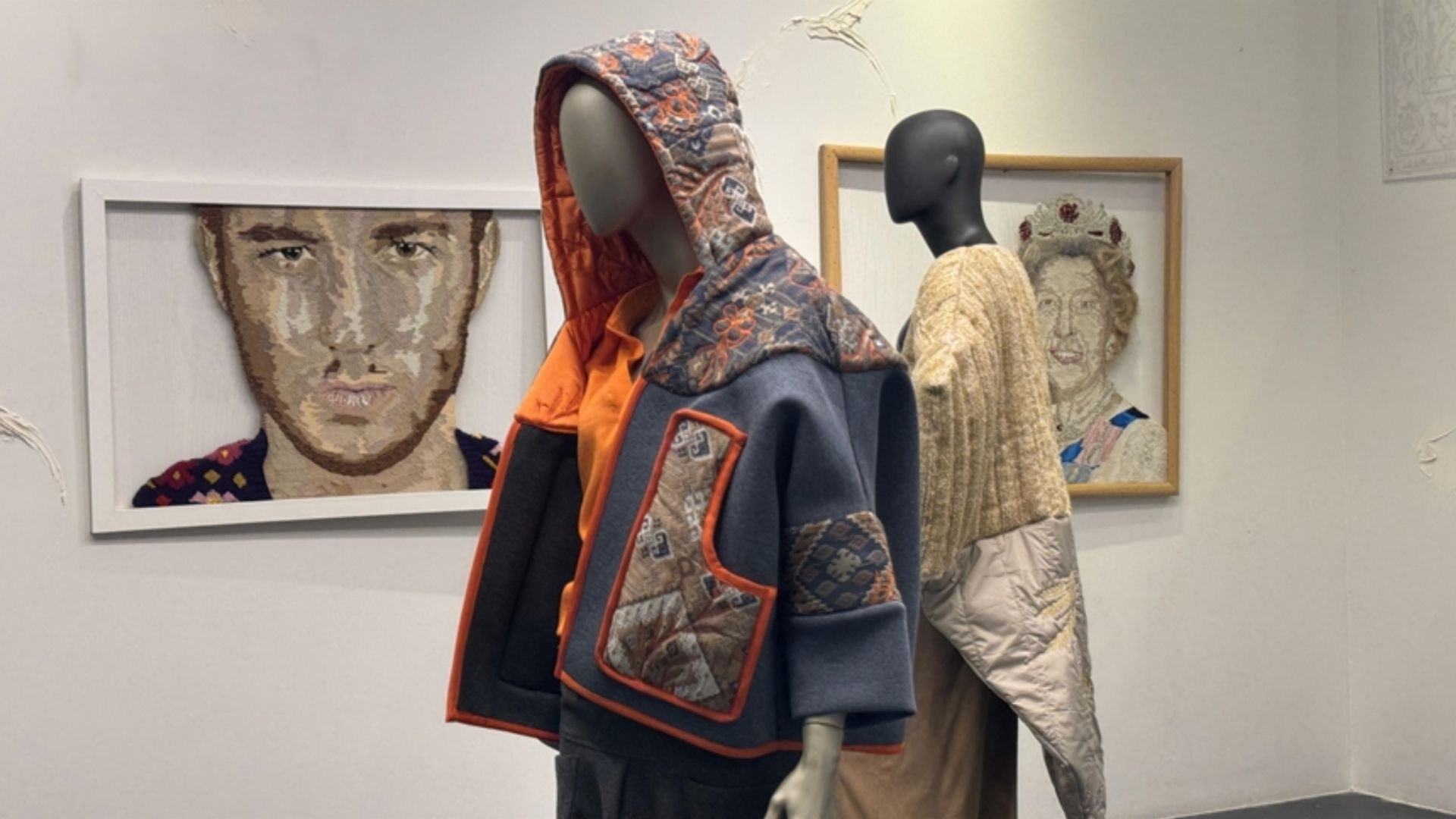
Approaching weaving as a form of cultural memory and expression, weaving artist Fırat Neziroğlu has played a significant role in bringing traditional Anatolian weaving to international audiences through exhibitions held in major cities such as London, Istanbul, Munich and Paris. Invited from London to weave a portrait of Queen Elizabeth II of the United Kingdom, Neziroğlu’s works have been exhibited in numerous cities including London, Istanbul, Munich, Paris, Incheon, Washington, Hawaii, New York, Kitakyushu, Shanghai, Tenjin, Chonburi, New Delhi, Venice, Buenos Aires, Como, Rome and Maniago. The artist is currently preparing for a new exhibition to be held in New York in September.
A graduate of Dokuz Eylül University’s Faculty of Fine Arts, Department of Textile and Fashion Design, Neziroğlu also completed his master’s degree and proficiency in art at the same institution. He has been active in the textile field for 29 years, was among the first lecturers of Çukurova University’s Textile Department, and also played a role in the establishment of Bahçeşehir University’s Faculty of Fine Arts, Department of Textile.
“A kilim is a language, read word by word”
Speaking to Anadolu Agency (AA), Neziroğlu pointed out that traditional Anatolian kilim motifs and symbols are not merely shapes, criticising their reduction to superficial meanings: “We try to imitate ourselves just as we try to imitate Europe. To be able to explain, we must first understand ourselves. A kilim is a language, read word by word. From it, we can understand the emotional state of the woman who wove it. The word ‘dokuma’ (weaving) itself comes from a deep, resonant sound—because wherever weaving takes place, you hear those deep sounds,” he said.
Neziroğlu noted that the emotional state of the weaver is reflected in the kilim itself, explaining that harder strikes of the kirkit when one is sad create flatter patterns, while lighter strikes when one is happy result in fuller motifs.
“Kilim motifs gain meaning through the relationship with nature”
Stating that attempts to modernise works produced with traditional techniques are misguided, Neziroğlu underlined that kilim motifs derive their meaning from the relationship established with nature: “For example, ‘pıtrak’ is a thorny plant. It clings to your trousers as you walk and hurts when you try to remove it. To be able to express this, we must first know nature and imitate it, so that we can translate it into pattern,” he said.
He added that focusing solely on form pushes cultural depth into the background and pointed out that original Anatolian forms have gradually been abandoned. “This country has meticulously created very fine Italian-style designs, yet the traditional robes of Anatolian elders have been forgotten. However, these garments have an exceptionally powerful and remarkable form,” he remarked.
“If we focus only on form, we cannot truly understand Anatolia”
Neziroğlu explained that the nomadic lifestyle of Turks also shaped weaving practices, noting that looms were fixed directly into the ground and fabrics were not suitable for cutting and tailoring, which led to the emergence of geometric patterns. “Out of scarcity, abundance was created. Today, when everything is available, if we focus only on form, we cannot truly understand Anatolia. My concern is to search for the stories embedded within those weavings,” he said.
Neziroğlu’s weaving technique becomes a subject of academic research
Stating that he became more visible following his exhibition İstifa, Neziroğlu said: “First Istanbul, then London, and then New York found me. Whatever we think, we must produce and put it forward. I was creating work on my own in Izmir, no one would ever see it—yet once it emerged, it suddenly became visible.”
Describing weaving as a very slow process, Neziroğlu explained that he developed his own distinctive style by deliberately leaving certain areas unwoven. He detailed his technique as follows: “Traditionally, colours in weaving are created horizontally, displayed vertically, and the aim is to leave no gaps between them. I developed a system that allows weaving in the space between two threads, as if another thread were there. This enables colours to blend more effectively and creates a more realistic appearance. I seek this sense of reality—this feeling of making eye contact with the viewer—within the weaving itself.”
Neziroğlu added that a total of six master’s theses have been written on his life and technique in the United States, Canada, Cairo and Türkiye, noting: “At universities, this technique is taught together with my name, and it has now gradually become established as a system.”
The weaving tradition takes root in other regions of Türkiye
The artist also shared that he visits weaving villages across all seven regions of Türkiye, exchanging knowledge with local women and supporting production. He noted that looms have also been set up in regions without a prior weaving tradition, where new fabrics are designed that may, over time, develop their own traditional identity.
Explaining that the fabrics produced are offered for sale in Türkiye and Europe, Neziroğlu said that a company with offices in the United States and Spain will begin marketing Anatolian fabrics under its own brand, contributing to the economic empowerment of Anatolian women.
He also mentioned that he organises free training sessions at his studio in Istanbul, concluding: “My next journey is New York. I am now in my fourth year there, and I am preparing for a new exhibition to be held in September. Production continues in my studio. After exhibiting my work in Türkiye, I will then send it to the United States.”