


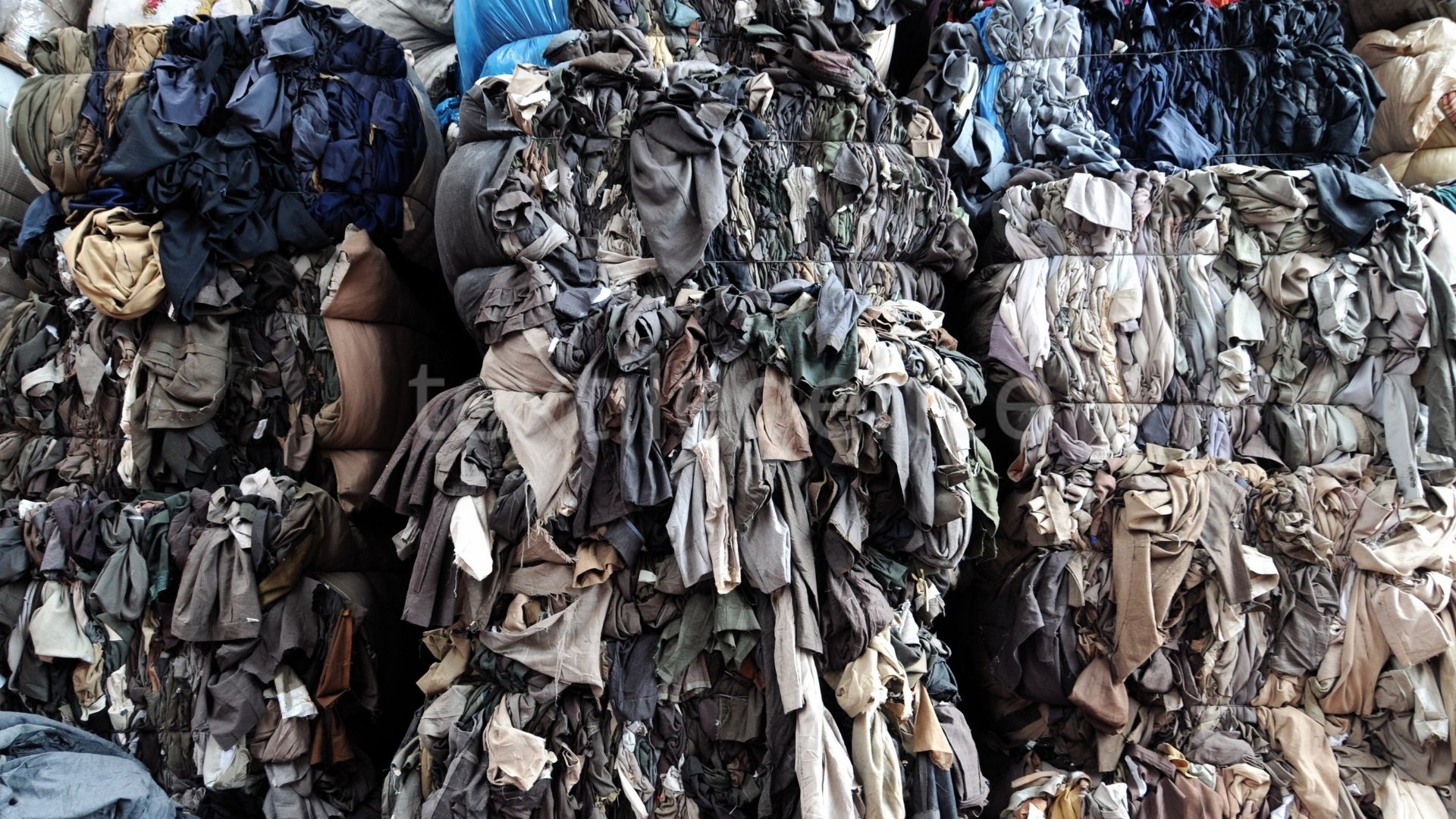

The European Anti-Fraud Office (OLAF), in cooperation with Italy’s Carabinieri and Turkish customs authorities, uncovered approximately 4,200 tonnes of textile waste that had been illegally shipped from Italy to Türkiye. According to Euronews, OLAF identified suspicious consignments and alerted the Turkish authorities. Inspections carried out upon the shipments’ arrival subsequently revealed the illegal exports.
The investigation focused on textile waste containing high levels of acrylic fibres.
Because these synthetic materials can persist in the environment for up to 200 years and require more sophisticated recycling processes, they are subject to strict environmental regulations and costly disposal requirements.
Authorities said the scheme constituted a highly profitable illegal operation designed to evade environmental regulations and recycling costs. Investigators found that the textile waste had allegedly been mislabelled in order to circumvent these obligations.
“Schemes such as this one that offer ways to illegally avoid the cost of recycling certain kinds of textile waste or complying with environmental rules are an opportunity for organised networks to make illegal gains,” said OLAF Director-General Petr Klement.
Klement described the investigation as evidence of the growing importance of international cooperation in combating environmental crime and protecting both economic interests and the environment.
Thousands more tonnes of textile waste discovered
During the investigation, inspectors found nearly 2,100 additional tonnes of textile waste stored in a warehouse linked to a recycling facility in Türkiye that was allegedly non-compliant with environmental legislation. Authorities also uncovered another stockpile that had arrived in a separate shipment.
The amount of illegally handled textile waste identified during the investigation extended well beyond the initial 4,200 tonnes. According to OLAF: “A further 768 tonnes of textile waste originating from Italy and connected to the same fraudulent scheme were found stored in the Turkish port of Mersin, also incorrectly labelled and ready to be illegally dumped.”
The operation also resulted in enforcement measures in Italy. According to OLAF, Carabinieri officers this week raided a business complex in Brescia believed to be linked to the suspected exports. Company premises, a fleet of trucks allegedly used in the operation, and financial assets worth approximately €12 million were seized.

Five EU member states call for tougher action on ultra-fast fashion
The operation comes at a time when Europe is strengthening oversight of cross-border textile waste shipments.
The European Commission introduced new textile waste management rules in 2025 aimed at preventing waste from being falsely labelled as reusable goods and exported abroad.
Meanwhile, five European Union member states led by France recently launched a coordinated initiative urging the Commission to take stronger action against ultra-fast fashion.
According to a document seen by Euronews, the countries argue that the rapidly expanding ultra-fast fashion business model threatens environmental objectives, places severe pressure on waste management systems, and encourages unsustainable patterns of consumption.
Highlighting the growing influx of ultra-fast fashion products entering the European market through Chinese platforms such as Shein and Temu, the five countries called on the Commission to: “Strengthen oversight and control of online platforms, reinforce market surveillance and close enforcement gaps under the Circular Economy Act and the Market Surveillance Regulation.”
Their proposals also include introducing additional performance requirements under the EU’s textile waste framework, supporting the transition to closed-loop textile recycling, and strengthening extended producer responsibility (EPR) schemes.
The five countries argue that current market practices encourage overconsumption and generate enormous volumes of textile waste.
French Minister for Ecological Transition Monique Barbut, speaking at a meeting of environment ministers on 25 June, said: “We are relatively ahead in this area and we are pleased to be able to share our experience and how Europe can move forward together on this topic as well.”